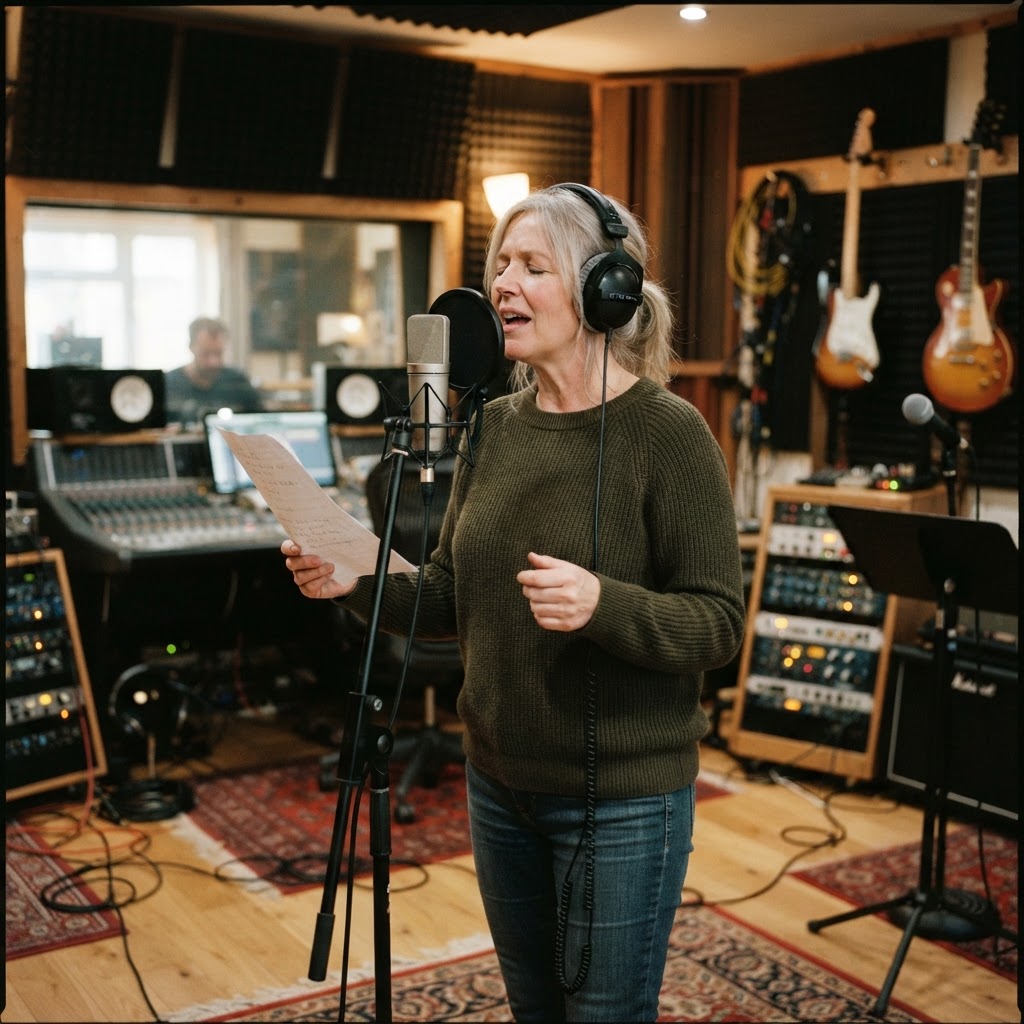
AI & AUDIO
A Veteran's Guide to AI: Using Modern Tech Without Losing Your Soul
Bob Williams breaks down how to use AI tools for restoration, inspiration, and mastering while keeping your creative identity intact.
I’ve spent more than forty years in this business, from the days of dragging heavy two-inch tape reels across studios in the heat of a Scottsdale summer to the modern era of recording a full symphony on a laptop. If there’s one thing I’ve learned at my desk for 'Sound Check with Bob,' it’s that technology never stops moving. The latest wave is Artificial Intelligence, and I know exactly what you’re thinking because I thought it too: 'Is this the end of the real musician?' My answer is a resounding no, provided you treat AI as a high-powered assistant rather than the boss. AI isn't here to replace your ears; it's here to save your time. Let’s talk about how to actually use these tools without feeling like you're cheating or, worse, making soul-less music.
Fixing the Unfixable
One of the most practical uses for AI in my studio isn't about making music—it's about saving it. For those of you working in a home studio, you know the struggle of the 'perfect take' being ruined by a neighbor’s lawnmower or a hum from your refrigerator. Back in the day, that take was headed for the trash. Now, we have AI-powered restoration tools like iZotope RX or SpectraLayers. These tools use neural networks to 'look' at the audio and separate the voice from the noise. It’s like magic. If you’re a beginner, don't be afraid of the 'Repair Assistant' features. They give you a solid starting point that would have taken an engineer like me five hours to achieve manually in 1995. The goal here is clarity. You want your listener to hear the heart of your performance, not the limitations of your room acoustics. Just remember: use a light touch. If you push these tools too hard, the audio starts to sound 'underwater' and robotic. Trust your gut.
AI as Your New Writing Partner
Sometimes the hardest part of music production is staring at a blank screen. We’ve all been there. This is where AI tools for composition, like Magenta or even the newer generative platforms, can be a godsend. I don’t suggest you let an AI write your whole song—that takes the fun out of it—but use it to break a stalemate. If you’re stuck on a melody, try using a tool that generates MIDI variations based on a few notes you played. It might give you a jump or a rhythmic syncopation you hadn't considered. Think of it as a collaborative jam session with a partner who never gets tired. You take the 10% that’s actually good, and you throw the rest away. That’s the secret to being a pro: knowing what to discard. Use AI to generate ideas, but use your human experience to curate them. Your life in Scottsdale, your heartbreaks, your joys—an algorithm doesn't have those. It only has data. You have the story.
The Mastering Safety Net
The final hurdle for most beginners is the 'black box' of mastering. It’s a specialized skill that takes decades to master (believe me, I’m still learning). AI mastering services like Landr or the 'Assistant' in Ozone have democratized this process. For a beginner, these tools are incredible because they provide a balanced, loud, and commercial-sounding track instantly. They analyze your frequency spectrum and compare it to thousands of successful songs. It’s a great way to get your demos sounding professional. However, don’t let it be the end of your education. Use the AI master as a reference. Compare what the AI did to your original mix. Did it boost the high end? Did it squash the transients? By analyzing what the AI 'chose' to do, you’re actually getting a free lesson in audio engineering. It’s a safety net, but eventually, you’ll want to start making those final tweaks yourself.
At the end of the day, a tool is only as good as the person swinging the hammer. AI is just another hammer in our belt. It can help you build a house faster, but you still have to design the home. Don’t fear the tech; embrace the efficiency so you can spend more time doing what we all came here to do: play music. Keep your ears open and your heart in the mix.
Technology is the tool, but your unique voice is the master.
EAR-TRAINING FIELD TRIP

Boston, USA
Symphony Hall
YOUR EXERCISE HERE
Close your eyes and listen for the way the reverb tail decays after a sudden orchestral stop—it is like a warm hug from the room itself. Try to pinpoint exactly when the sound stops reflecting and becomes silence; that is the natural depth no AI algorithm has quite mastered yet.
Free Listening Worksheet
5 questions on sound & music (2 fill-in-the-blank). Take it to the venue.
Get the six cheat sheets — free
One page each for room acoustics, gain structure, live sound, mixing, mic placement and guitar setup. The numbers and the moves, nothing else.
No spam. Unsubscribe anytime.
You Just Read the Free Version.
The full Sound Check course turns this into a system — 8 modules, 6 hours, a room that finally sounds right.
ENROLL NOW — $97