AI & MUSIC
AI and the Music Industry: What Does It Mean for Sound Engineers in 2026?
AI mixing plugins, auto-EQ, and predictive feedback suppression are already in professional rigs. But the human ear still wins where it matters most.
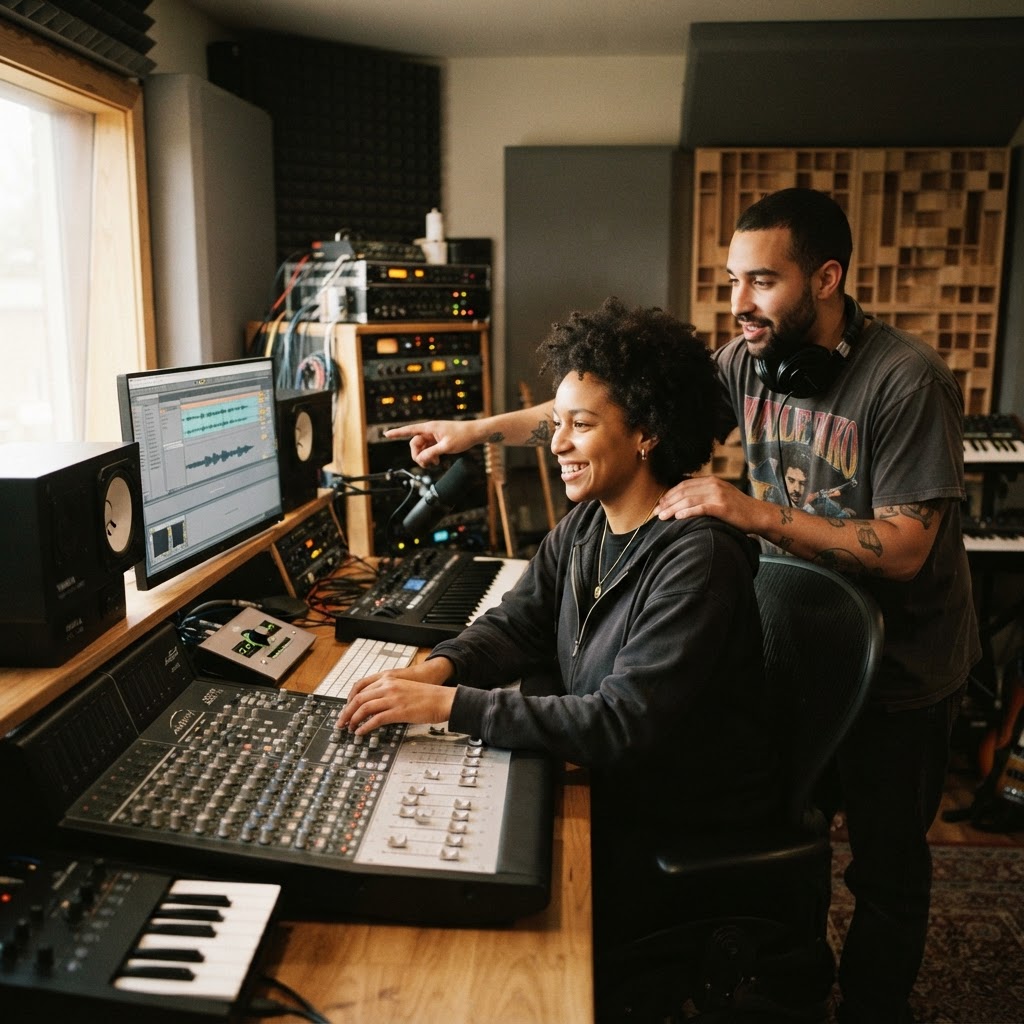
Walk into any studio in 2026 and you'll find AI sitting next to the console — not behind it. Auto-EQ plugins analyze a mix in seconds. Mastering services promise radio-ready loudness from a single upload. Live systems now predict feedback before it happens and notch it out automatically.
It's tempting to call this a threat. I don't see it that way.
The jobs AI is best at — the repetitive, measurable, comparison-based tasks — were never the part that made a record great. Balancing frequencies to a target curve is math. Choosing which take has the right feel is not. AI can match a reference master to within a fraction of a dB. It cannot tell you whether your chorus should hit harder than your verse.
The floor rose, not the ceiling
What's actually changing is the floor, not the ceiling. Bad mixes get less bad faster. Beginner engineers get a safety net. But the ceiling — the work that makes someone stop scrolling and listen — still belongs to the person who understands why a sound moves people.
Where the human still wins
Here's the practical takeaway: learn the tools, because your competition will. But spend most of your energy on the fundamentals AI can't replace: room acoustics, gain structure, arrangement, and listening. The engineers who thrive in 2026 are the ones who use AI as an assistant, not a substitute.
The music is still in you. The tools just got faster.
EAR-TRAINING FIELD TRIP

Decatur, GA, USA
Eddie's Attic
YOUR EXERCISE HERE
Close your eyes and listen to how the low ceilings and wooden surfaces create a tight, dry resonance that doesn't muddy the vocals. Pay attention to the 'listening room' silence; notice how even the smallest shift in a singer's mic technique is crystal clear because there's zero ambient noise floor to hide behind.
Free Listening Worksheet
5 questions on sound & music (2 fill-in-the-blank). Take it to the venue.
You Just Read the Free Version.
The full Sound Check course turns this into a system — 8 modules, 6 hours, a room that finally sounds right.
ENROLL NOW — $97