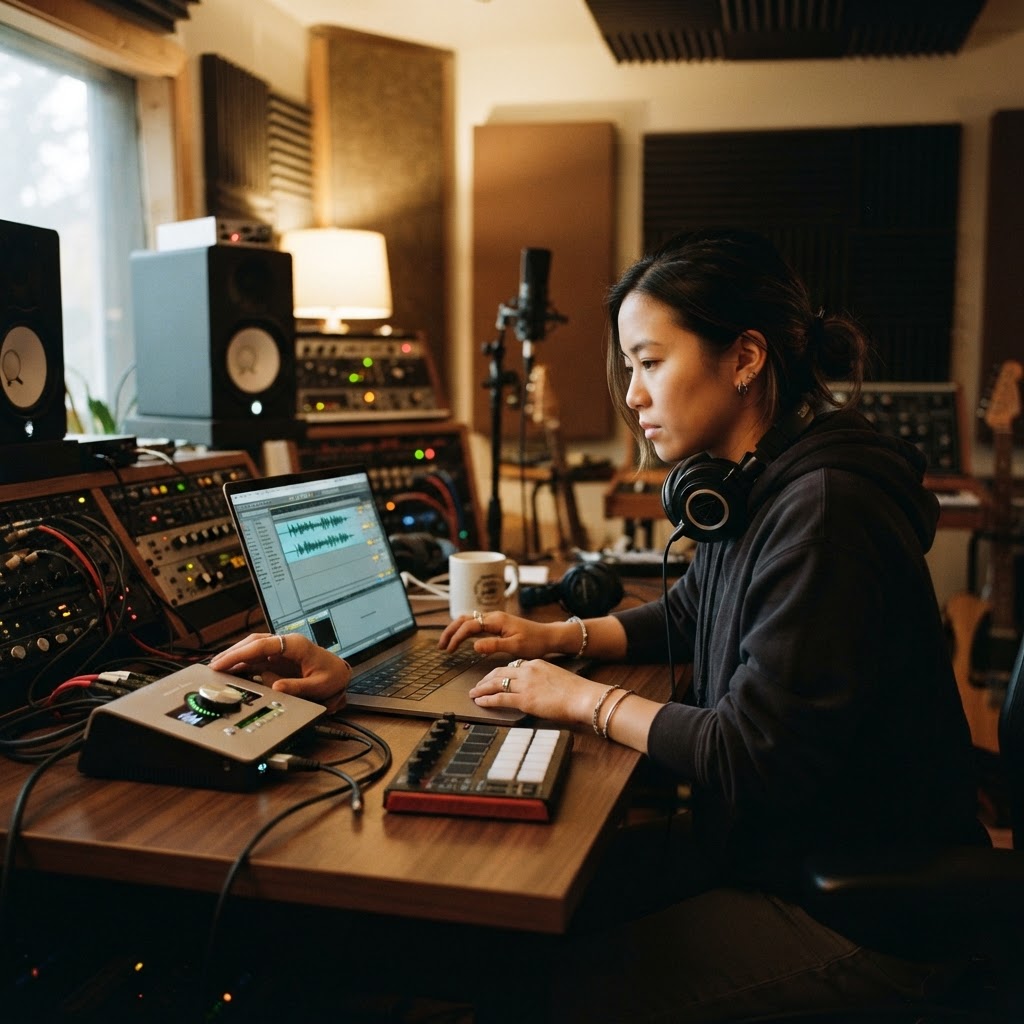
AI & AUDIO
AI Mastering Tools: Honest Review After 6 Months
I ran every major AI mastering service against my own work for half a year. Here's what they're genuinely good at — and where they still lose to a human.
I spent six months running AI mastering services on the same mixes I mastered myself, then comparing them blind. Here's the honest verdict.
What AI mastering is genuinely good at
Loudness and format compliance. If you need a track to hit streaming targets (-14 LUFS, proper ISRC, correct sample rate), AI services nail this instantly and consistently. For demos, social media clips, and quick releases, they're genuinely useful and fast.
Where it still loses to a human
Tone and translation. AI mastering optimizes for a target curve, which sounds correct but often lifeless — the same problem as AI sound check. A human master adjusts for the song: brightening a dull mix, taming a harsh one, making a chorus hit. AI applies the same answer to every track. The differences are subtle but they're the differences between 'fine' and 'great.'
My recommendation
Use AI mastering for demos, social content, and tracks you need fast. For anything you care about — a single, an EP, your flagship work — either learn to master yourself or hire a human. The AI is a tool, not a replacement. Six months in, that hasn't changed.
The floor rose. The ceiling didn't. Your ears still decide.
EAR-TRAINING FIELD TRIP

Boston, USA
Symphony Hall
YOUR EXERCISE HERE
Sit mid-house and close your eyes during a quiet passage; listen for how the sound wraps around you without feeling 'processed' or 'flat.' If an AI mastering tool sucks the life out of your mix's depth, you'll know it because your ears have tasted the real deal here.
Free Listening Worksheet
5 questions on sound & music (2 fill-in-the-blank). Take it to the venue.
You Just Read the Free Version.
The full Sound Check course turns this into a system — 8 modules, 6 hours, a room that finally sounds right.
ENROLL NOW — $97