MIXING
Faders First: Why Your Plugins Are Killing Your Mix
Stop hiding behind expensive plugins. Learn the fundamental pillars of mixing—balance, subtractive EQ, and panning—from a 40-year industry veteran.
Listen, I’ve spent over four decades behind consoles in Scottsdale and across the country. I’ve seen kids come into 'Sound Check with Bob' with five different compressors on a single kick drum before they’ve even touched the fader. If there’s one thing forty years has taught me, it’s that a great mix is built on a foundation, not a pile of fancy software. You’re smart, you’ve got the gear, but you need the discipline to use it right. This isn't about secret tricks; it's about priorities.
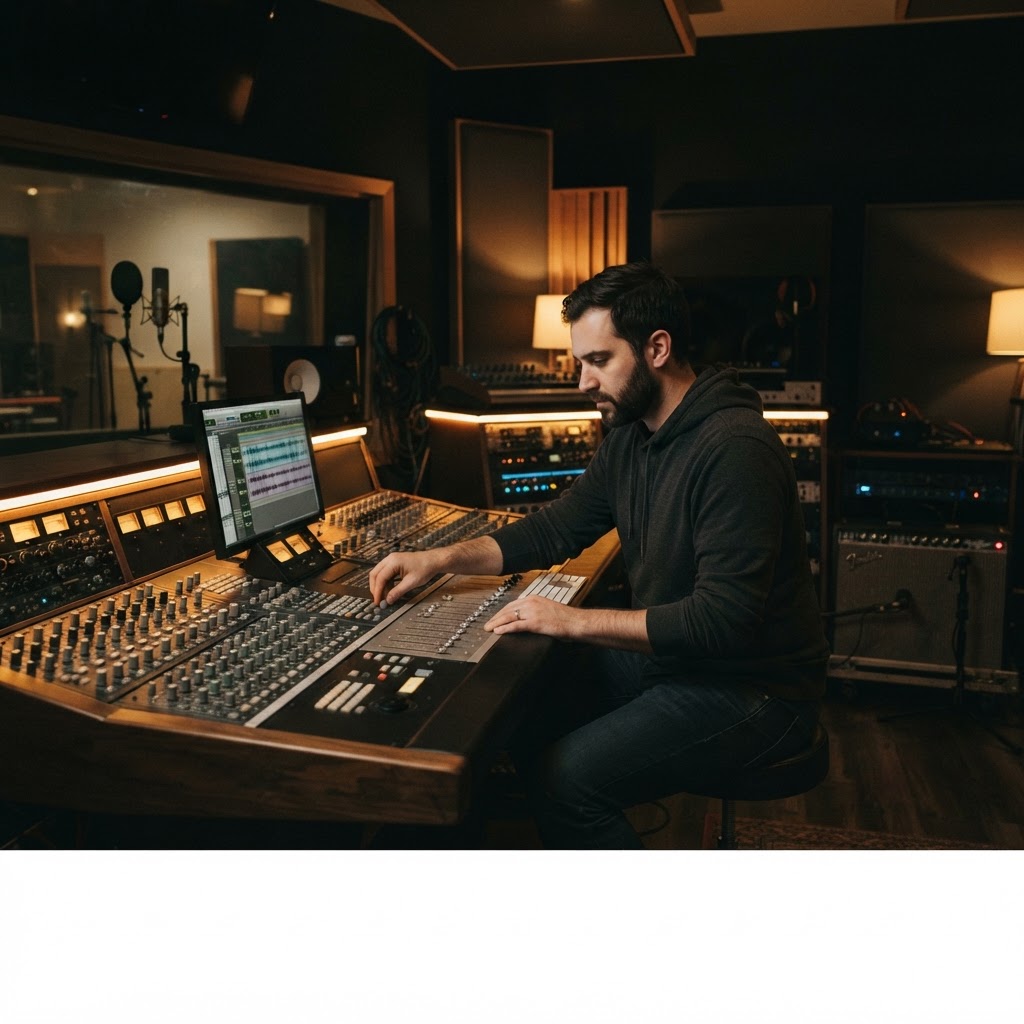
Mastering the Balance Before the Buttons The most important tool you have isn’t a $500 plugin; it’s the fader. If you can’t make a song sound decent with just volume levels, no amount of reverb is going to save you. Before you reach for an EQ or a compressor, spend twenty minutes just moving faders. This is what we call the 'static mix,' and it’s where the magic actually happens. You need to find the natural hierarchy of the song. Is the vocal the star? Then it needs to sit proudly. Is the groove driven by the bass? Then that needs to be your anchor.
I see too many beginners rushing to add effects because they think the raw tracks sound 'boring.' Tracks aren't supposed to be exciting individually; they are supposed to work together. A solid static mix solves 80% of your problems. If you can get the song to move you just by adjusting the levels, you are already ahead of 90% of the bedroom producers out there. Spend time here. It’s the most professional thing you can do for your sound.
Carving Space with Subtractive EQ Once your levels are set, we look at EQ. Here is the secret I tell all my students: stop boosting. Beginners love to boost the highs to make things 'crisp' or the lows to make them 'thump.' But every time you boost, you’re eating up your headroom and creating a muddy, phase-shifted mess. Think of your mix like a small closet. If you keep stuffing more clothes in, eventually you can't see anything. You have to take things out to make room for what matters.
Instead, think like a sculptor. You have a block of marble, and you’re taking away what doesn’t belong. If the acoustic guitar is fighting the vocal, don't boost the vocal—cut the frequencies in the guitar that are overlapping, usually around that 300Hz to 500Hz range. Use a high-pass filter on everything that isn't a kick drum or a bass guitar. This cleans up the 'mud' below 100Hz and lets your low end breathe. When you cut the bad stuff, the good stuff naturally shines through without you having to touch a gain knob.
Compression is a Tool, Not a Safety Net Compression is the most misunderstood tool in the shed. Many beginners use it to try and 'fix' a performance that’s all over the place. While it can help, your goal with compression should be consistency and character, not total flattening. If you see your needle jumping more than 3-6dB on a regular track, you’re probably killing the life of the music. Start with a slow attack. Let the initial 'thump' of the drum or the 'T' sound of the vocal pass through before the compressor kicks in. This keeps the mix feeling punchy and alive.
Panning for Perspective and Width Finally, let’s talk about the stereo field. A common mistake is trying to make everything sound huge by panning it all wide. If everything is wide, nothing is wide. You need contrast to create a sense of scale. Keep your 'power' elements—the kick, the snare, the bass, and the lead vocal—dead center. This provides the sonic anchor for the listener. Pan your guitars, keyboards, and backing vocals to the sides to create a sense of space. Think of it like a stage setup. You wouldn't have five musicians standing in the exact same spot center stage, would you? Give each instrument its own 'seat' in the theater. When you give things their own space in the left and right speakers, you’ll find you don't need nearly as much EQ to make them sound clear.
Mixing isn't about the gear you own; it's about the way you hear. Don't get caught up in the technicalities so much that you forget to listen to the song as a fan. If it feels right and the message is clear, you’ve done your job. Trust your ears, keep it simple, and remember that every great engineer started exactly where you are right now.
Keep your ears open and your faders ready—you’re doing better than you think.
EAR-TRAINING FIELD TRIP

Nashville, TN, USA
Ryman Auditorium
YOUR EXERCISE HERE
Find a seat in the center of the original oak pews and just listen to the room's natural decay. Notice how the curved balcony and wood surfaces reflect sound with a warmth that no digital emulation can perfectly replicate; that's the 'air' you want to leave room for in your mix.
Free Listening Worksheet
5 questions on sound & music (2 fill-in-the-blank). Take it to the venue.
Get the six cheat sheets — free
One page each for room acoustics, gain structure, live sound, mixing, mic placement and guitar setup. The numbers and the moves, nothing else.
No spam. Unsubscribe anytime.
You Just Read the Free Version.
The full Sound Check course turns this into a system — 8 modules, 6 hours, a room that finally sounds right.
ENROLL NOW — $97