LIVE SOUND
Mastering the Sound Check: A Veteran's Guide to Stress-Free Shows
Stop wasting time during sound check. Learn my proven, methodical routine to get a professional mix in record time.
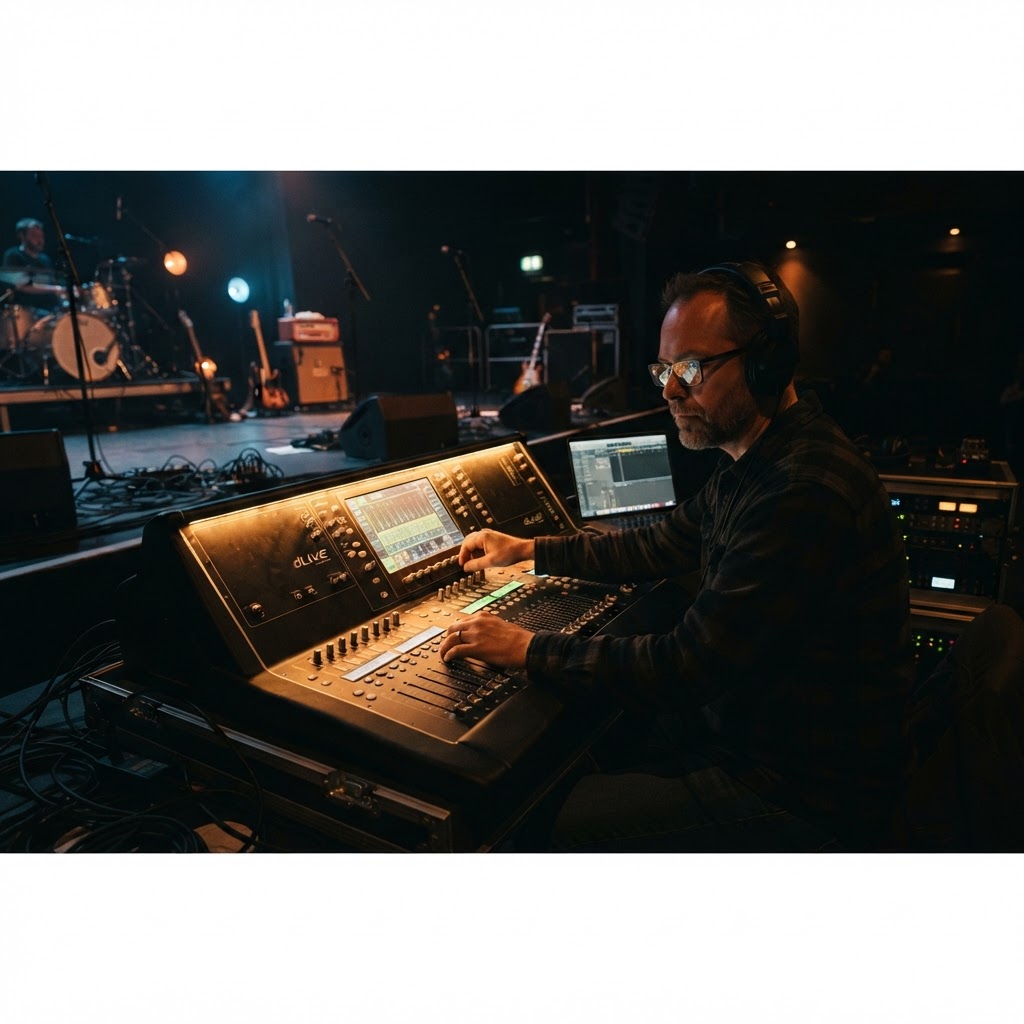
Hey there. I'm Bob Williams, and after four decades of running sound in everything from desert dives to Scottsdale event centers, I’ve seen it all. If there is one thing that separates a smooth show from a nightmare, it is the sound check. Beginners think sound check is a time to play their best solos; pros know it is actually a diagnostic procedure. My course, 'Sound Check with Bob,' is built on the idea that speed and consistency save your ears and your reputation. Here is my no-nonsense routine to get you stage-ready.
The 'Input-First' Discipline
Don’t let the band start jamming immediately. It’s chaos. Start with individual inputs. I always begin with the kick drum. Get the gain structure right, hit the EQ, and establish your reference level. Move to the snare, then the rest of the kit. Only then should you introduce the bass. The goal is to build a foundation. If the rhythm section doesn't sound tight and clear in isolation, it will never sound good once the guitars start competing for space. Don't worry about the 'vibe' yet; focus on the clarity of the signals.
The Band Mix Secret
Once the individual channels are sorted, bring the band in. Crucial rule: tell them to play their loudest song. Don’t have them check on a ballad. You need to know where the ceiling of your system is when they are at their most aggressive. If you mix for a soft song and they decide to rock out at 10 PM, you will be scrambling to pull faders down while fighting feedback. Set your gain structure for the loud stuff, and you’ll find that the quiet parts naturally sit right where they need to be in the mix.
Managing the Monitors
Monitor problems are the number one cause of long sound checks. I always ask the lead singer exactly what they need, then I bring the monitor up slowly. If I start at 100% volume, they will immediately ask for more of everything, leading to a muddy stage mix. Start at zero and add only what is missing. Usually, it’s just kick, snare, and vocal. Avoid the temptation to put the whole drum kit in the singer's wedge unless they absolutely demand it. Less on stage means more clarity in the house, which makes your job at the front-of-house desk infinitely easier.
Finally, check your phase. It sounds technical, but it’s just the difference between a punchy kick and a hollow, thin one. A quick flip of the phase switch can save a set. Keep your eyes on your gain stages throughout the night, and don't be afraid to ask for a restart if the input isn't working right. Your audience doesn't care if you started on time, but they will certainly notice if you sound terrible because you rushed the prep.
Take your time, be methodical, and let the music do the heavy lifting.
EAR-TRAINING FIELD TRIP

Nashville, TN, USA
Ryman Auditorium
YOUR EXERCISE HERE
During a quiet moment or sound check, close your eyes and listen to the natural decay of a single acoustic guitar note in the room. Notice how the wooden pews and unique architecture shape the reverb, and try to identify if the sound feels 'bright' or 'warm' as it travels to your ears.
Free Listening Worksheet
5 questions on sound & music (2 fill-in-the-blank). Take it to the venue.
Get the six cheat sheets — free
One page each for room acoustics, gain structure, live sound, mixing, mic placement and guitar setup. The numbers and the moves, nothing else.
No spam. Unsubscribe anytime.
You Just Read the Free Version.
The full Sound Check course turns this into a system — 8 modules, 6 hours, a room that finally sounds right.
ENROLL NOW — $97