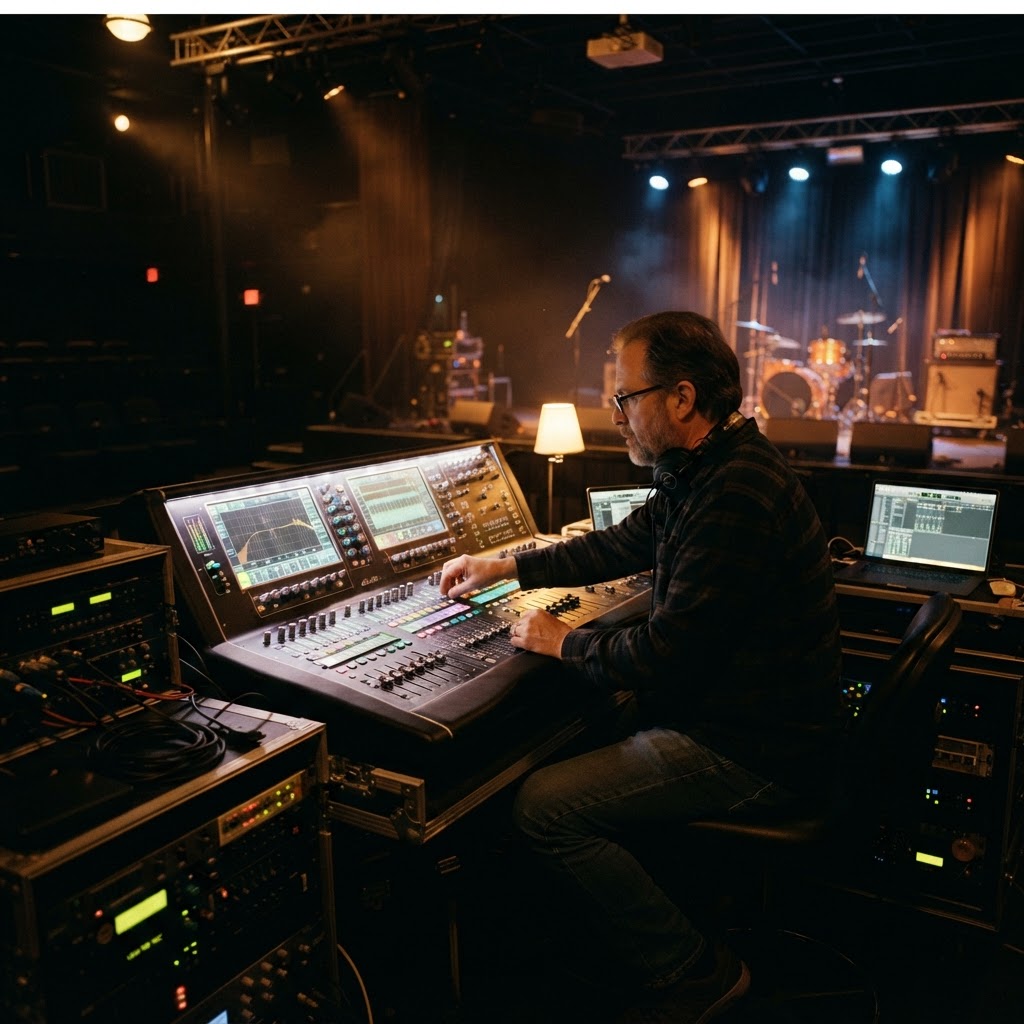
LIVE SOUND
Mastering the Sound Check: A Veteran’s No-Nonsense Guide
Stop wasting time during your sound check. Learn my proven, field-tested routine to get a professional mix in under twenty minutes.
Look, I’ve spent over 40 years behind the board, from dusty Scottsdale dive bars to mid-sized festival stages. If there is one thing I’ve learned, it’s that most bands treat sound check like a band rehearsal. It isn’t. A sound check is a technical diagnostic session, not a time to jam on your new bridge riff. If you want a good show, you need a disciplined routine. Here is how I run things so the FOH engineer stays happy and the crowd actually hears your lyrics.
The 'Stage Left' Hierarchy
Start with the drums. Every single time. If the drums are muddy, the whole mix is doomed. I ask for a kick drum pattern first, then the snare. Don’t get fancy. Just give me consistent, repetitive hits at the volume you intend to play during the set. If you play softly during the check and then hammer the kit like a caveman at showtime, you’ve already broken the mix. Be honest with your dynamics. Once the kick and snare are dialed, move to the rest of the kit, then the bass. Lock the rhythm section in before you even think about guitars or vocals.
The Vocal Integrity Test
Most singers waste time singing a ballad that highlights their range but tells me nothing about their stage volume. Sing the most aggressive, loud, or complex part of your set during the sound check. I need to know where your peaks are so I can set the gain structure properly. If I set your gain based on your low-volume mic test, the moment you belt out the chorus, the preamp will clip and sound like a lawnmower. If you aren't sure, ask me to 'ring out' the monitors. Stand where you’ll be standing during the show, grab your mic, and give me a clear, rhythmic 'check-one-two.' Don't tap the mic. Don't blow into it. Just speak clearly.
Communication is Currency
Stop shouting at the sound person from the stage. If you need more of something in your monitor, give a specific request. Don't say 'it sounds bad'—I can't fix 'bad.' Say 'I need more snare in the wedge' or 'my vocal is buried by the keys.' Keep your stage volume down. If your guitar amp is pointing at your ears and cranking at volume eleven, I have to fight your amp just to get you into the mains. The best sounding stages are the ones where the volume is managed at the source. Trust me, if the stage is quiet, the room sound will be massive.
Consistency is the secret sauce. If you do this every single gig, you’ll spend less time fiddling with knobs and more time connecting with the crowd. Get the tech stuff out of the way early so the art can actually happen. If you follow this routine, the guy at the board will respect you, and the audience will actually hear what you’re trying to say. Keep your volume in check and your head in the game.
EAR-TRAINING FIELD TRIP

Nashville, TN, USA
Ryman Auditorium
YOUR EXERCISE HERE
Find a seat in the middle of the floor and close your eyes during the sound check. Listen specifically for how the wooden pews and vaulted ceiling color the decay of the snare drum, noting how the natural room resonance fills the space without needing extra digital reverb.
Free Listening Worksheet
5 questions on sound & music (2 fill-in-the-blank). Take it to the venue.
You Just Read the Free Version.
The full Sound Check course turns this into a system — 8 modules, 6 hours, a room that finally sounds right.
ENROLL NOW — $97