LIVE SOUND
Mixing Fundamentals: Stop Pushing Faders and Start Listening
Forty years behind the console taught me one thing: mixing isn't about making things loud, it's about making things clear.
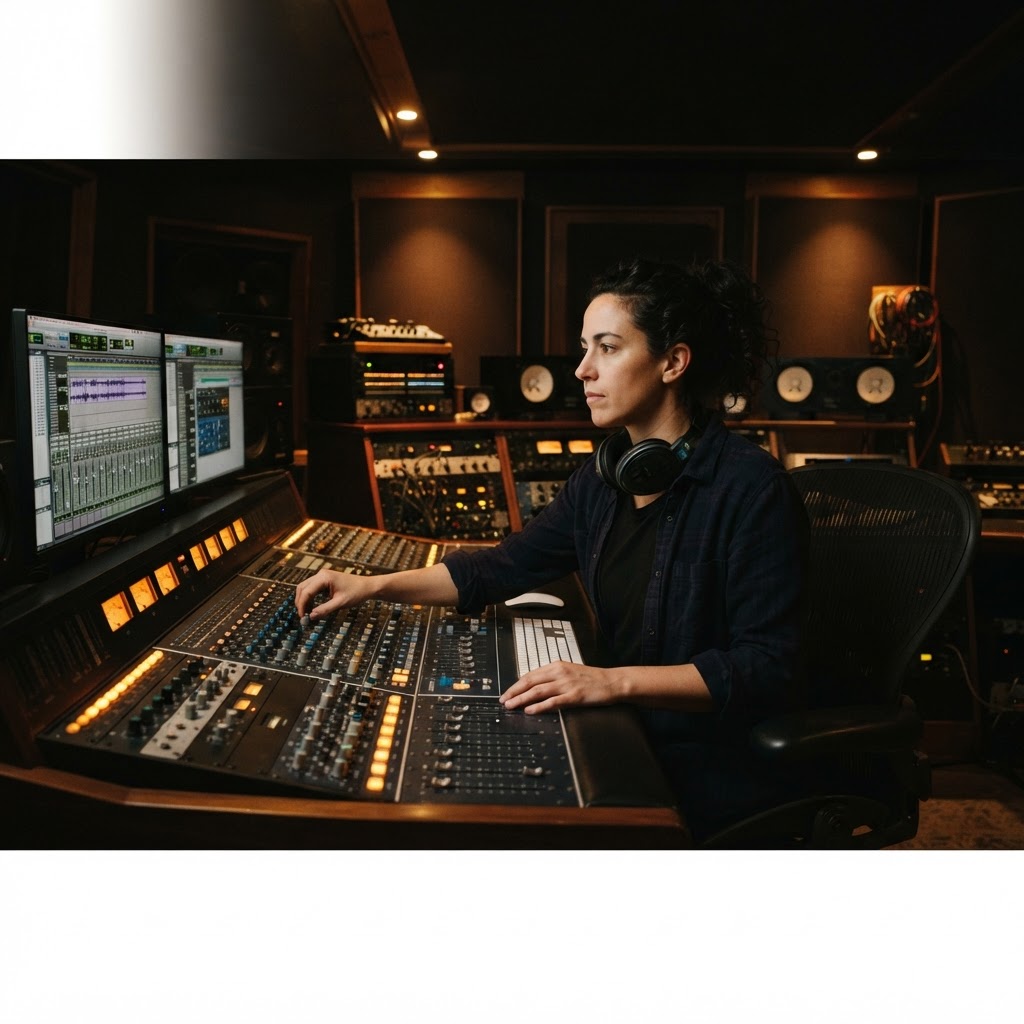
After four decades of tweaking knobs in Scottsdale clubs and concert halls, I’ve seen enough beginners drive themselves crazy trying to 'fix' a mix by pushing every fader to the top. It doesn't work that way. If everything is loud, nothing is loud. Here is how you actually approach a mix.
The Art of Subtractive EQ Most beginners reach for the boost knob when they want to hear an instrument better. Stop. If your guitar sounds muddy, don't boost the treble; cut the mud around 300Hz to 500Hz. If the kick drum is fighting the bass, find the frequency where they clash and carve out space. Think of your mix like a suitcase; if you want to add something new, you have to take something else out. Always start by cutting unwanted frequencies before you ever think about adding gain. It clears the sonic clutter instantly.
Master Your Gain Staging If your levels are redlining at the input stage, you are just feeding distortion into your mix. Gain staging is the foundation of everything. You want a healthy signal-to-noise ratio that gives you enough headroom to work with. Keep your inputs hot enough to be clear, but cool enough that your digital bus isn't clipping. If you start with a messy, distorted signal, no amount of compression or EQ will save that mix. Set your gains properly at soundcheck and leave them alone.
Prioritize the Source I teach this in 'Sound Check with Bob' constantly: a great mix happens at the microphone, not the console. If your snare drum sounds like a wet cardboard box in the room, it will sound like a wet cardboard box through the speakers, no matter how much reverb you pile on. Spend your time getting the mic placement right. Experiment with distance and angle before you touch a single channel strip. When the source sounds good, your job becomes 90 percent easier. If the source is bad, you are just polishing a turd. Stop trying to fix bad inputs with expensive plugins and start focusing on the physics of sound capture. Your audience deserves a clean, balanced mix, not a wall of noise.
EAR-TRAINING FIELD TRIP

Nashville, TN, USA
Ryman Auditorium
YOUR EXERCISE HERE
Find a seat in the wooden pews and close your eyes during the first song. Instead of focusing on the melody, try to isolate the decay of the snare drum against the room's natural reverb, noting how the wood construction colors the sound differently than a modern concrete venue.
Free Listening Worksheet
5 questions on sound & music (2 fill-in-the-blank). Take it to the venue.
You Just Read the Free Version.
The full Sound Check course turns this into a system — 8 modules, 6 hours, a room that finally sounds right.
ENROLL NOW — $97