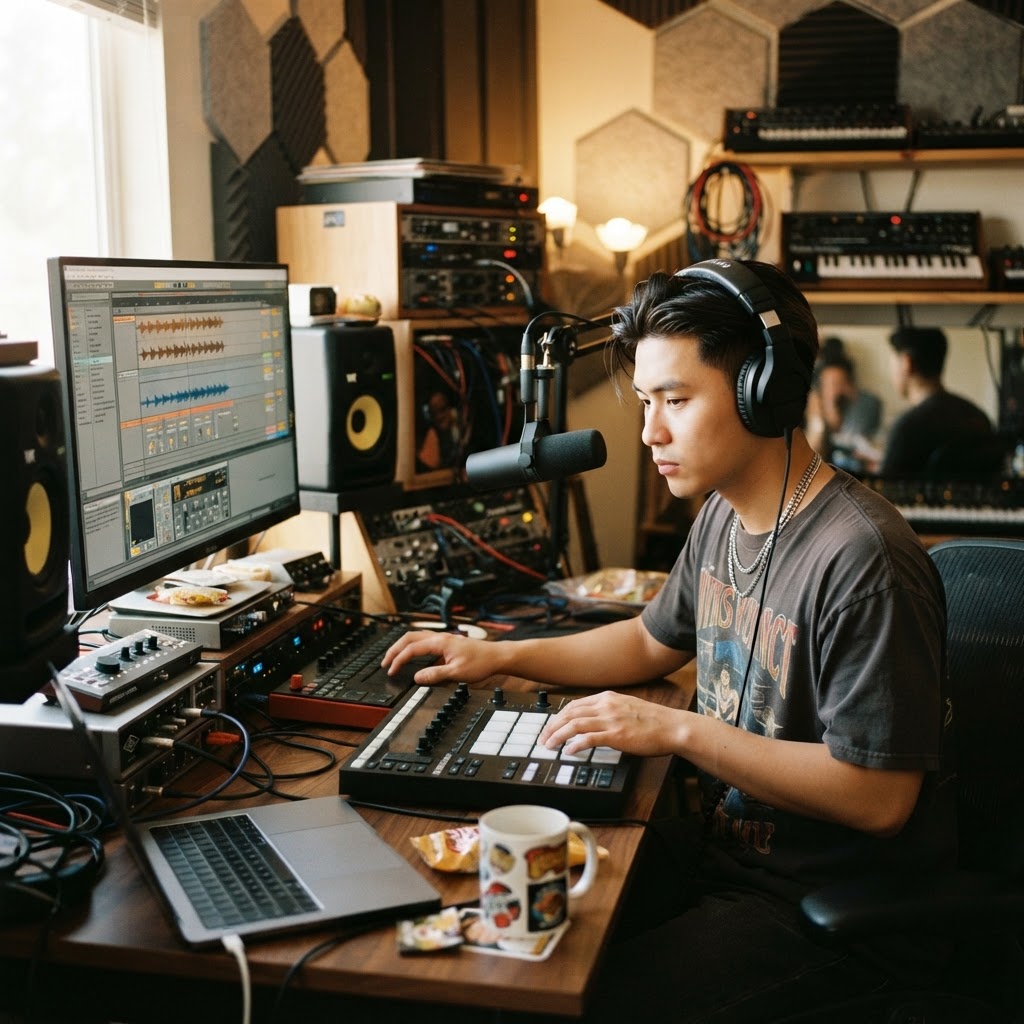
HOME STUDIO
Recording Vocals at Home: From Closet Booth to Clean Take
You don't need a vocal booth to get pro vocals at home. You need a closet, a blanket, and these four rules.
Clean home vocals aren't about expensive gear — they're about controlling the room around the mic. Here's the setup that works in any apartment.
Use the closet
Clothes are excellent acoustic absorption. A closet full of hanging clothes is a free vocal booth — soft surfaces on every side kill reflections. Set up just inside the closet door, mic facing the clothes, singer facing out. The difference versus an open bedroom is night and day.
The blanket fort
No walk-in closet? Hang a heavy blanket behind the singer and one behind the mic. A $20 moving blanket behind the mic is the single biggest vocal upgrade you can make for free.
Mic technique
Cardioid pattern, 6-8 inches away, slightly above the singer's mouth angled down at the nose. This avoids the plosive blast of breathing directly into the diaphragm and adds natural chest presence. Add a pop filter. Always.
One take, many passes
Record the vocal three times — three full passes. Comp the best lines together. This 'comping' is how nearly every modern vocal is built, and it's far more forgiving than trying to nail one perfect take.
A closet, a blanket, good technique, and three passes. That's a professional home vocal. No booth required.
EAR-TRAINING FIELD TRIP
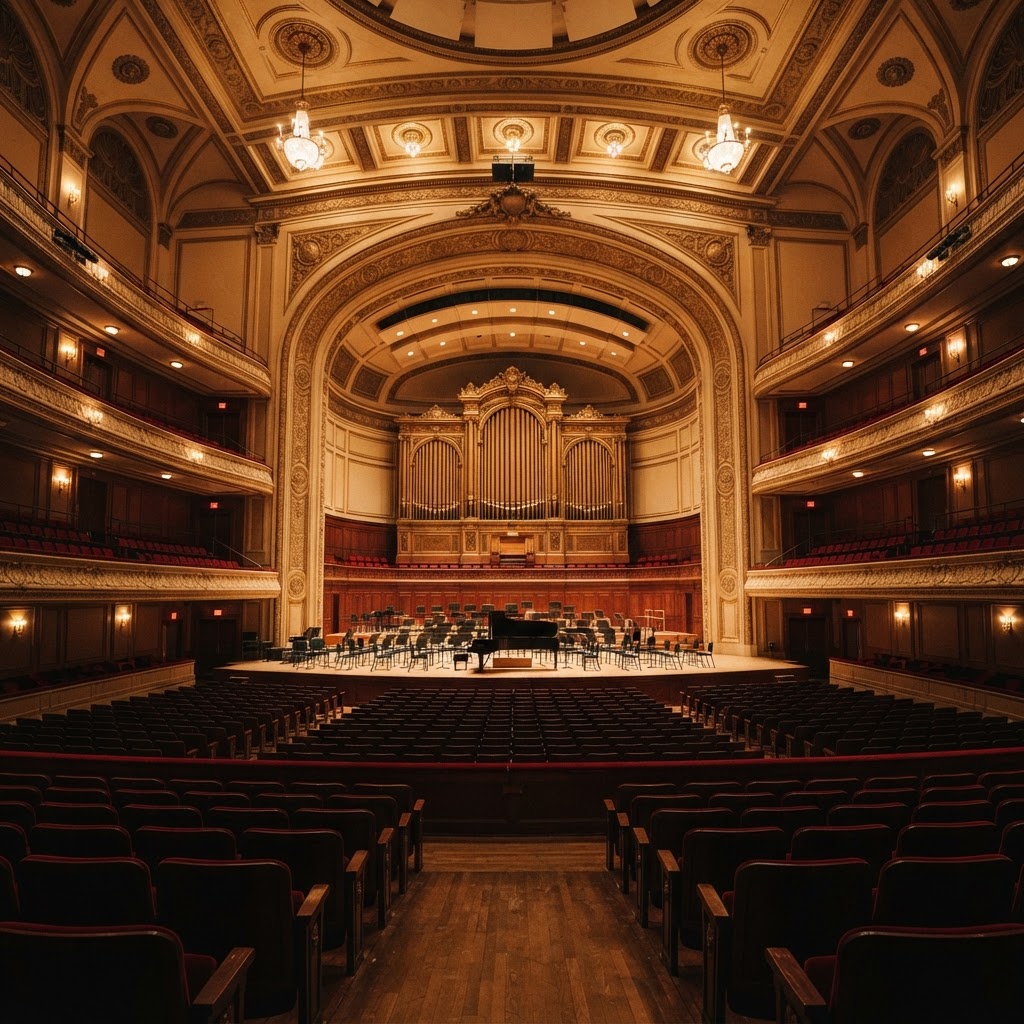
Chicago, USA
Symphony Center (Orchestra Hall)
YOUR EXERCISE HERE
Close your eyes during a quiet passage and listen to how the sound stays 'tight' yet spacious; it doesn't wash out. When you're back in your home studio, you want to mimic this by killing the flutter echo in your closet so you hear the vocal, not the walls.
Free Listening Worksheet
5 questions on sound & music (2 fill-in-the-blank). Take it to the venue.
You Just Read the Free Version.
The full Sound Check course turns this into a system — 8 modules, 6 hours, a room that finally sounds right.
ENROLL NOW — $97