HOME STUDIO
Small Room, Big Sound: A Veteran's Guide to Speaker Placement
Stop blaming your gear for a muddy mix. Veteran engineer Bob Williams shares the essential geometry for mastering speaker placement in tight spaces.
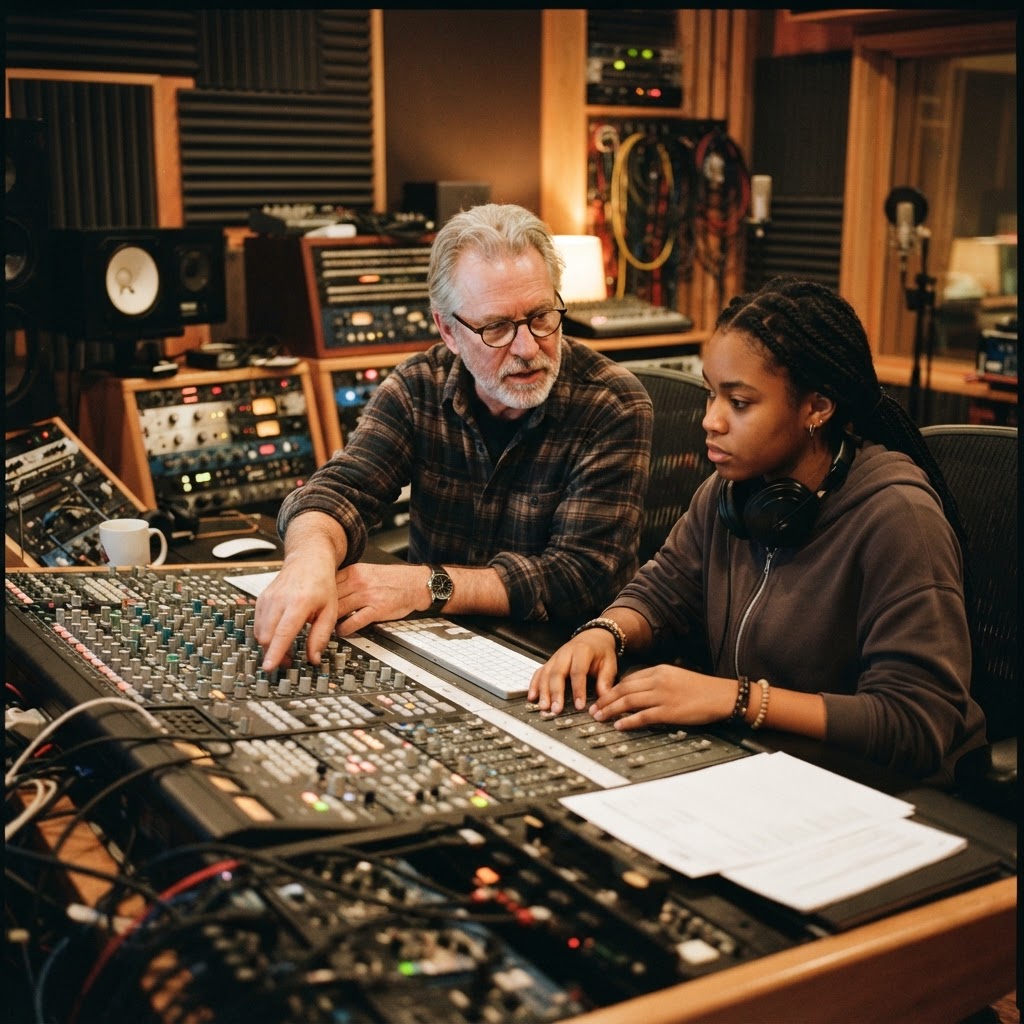
Look, I get it. You are working out of a spare bedroom or a converted garage here in the desert, and your mixes sound... well, muddy. After forty years behind the board, I have seen million-dollar rooms and I have seen closets. The secret to a great sound isn't always the price tag on the speakers; it is where you put them. In my 'Sound Check with Bob' sessions, this is the first thing we fix. Let's get your ears in the right place.
Small rooms are, frankly, liars. They reflect sound off the walls so fast that your brain cannot distinguish the direct sound coming from the speaker from the echo bouncing off your drywall. This creates 'standing waves' and 'comb filtering'—fancy terms for a sound that is either boomy or thin. You cannot EQ your way out of a bad room, but you can outsmart it with a tape measure.
The Rule of Symmetry
To fight the chaos of a small room, you need absolute symmetry. Your setup should be centered along one wall, ideally the shorter wall, so the speakers fire down the longer dimension of the room. If you are tucked into a corner because that is where the desk fits best, you are already in trouble. One ear will get a massive bass boost from the corner wall while the other gets a thin, delayed reflection. This makes your stereo image lean to one side like a lopsided cactus.
Measure it out. If your left speaker is three feet from the side wall, your right one better be exactly three feet from its respective side wall. This ensures that the reflections hitting your ears from the sides arrive at the same time, keeping your center image rock solid. If your singer sounds like they are standing two feet to the left of center, check your measurements before you reach for a panning knob.
The Equilateral Triangle and the 38% Mark
Most folks I see in Scottsdale home studios sit too close or too far. Think of an equilateral triangle. The distance between your two speakers should be exactly the same as the distance from each speaker to the back of your head. Start with a distance of about four to five feet. This creates the 'sweet spot' where the phase relationship between the speakers is most accurate.
Now, where do you sit in the room? Avoid the dead center at all costs. The middle of any room is a 'null'—a place where bass frequencies literally cancel each other out. You will be mixing in a vacuum, wondering why your kick drum has no punch, only to find out it sounds like a literal explosion when you play it in your car. A solid starting point is the '38% Rule.' If your room is ten feet long, try to position your listening chair about three feet eight inches away from the front wall. This is statistically the spot where the frequency response is flattest.
Also, keep those tweeters at ear level. High frequencies are highly directional. If your speakers are sitting flat on a desk pointing at your chest, you are missing the detail in the cymbals and the air in the vocals. Use dedicated stands or even stacks of heavy books if you have to. Just get those tweeters aimed directly at your ears.
Taming the Back-Wall Bounce
The wall directly behind your speakers is your biggest enemy in a small space. This causes something we call Speaker Boundary Independence Response (SBIR). When low-frequency energy wraps around the back of your speaker and hits the wall, it bounces back and interferes with the sound coming forward. This usually results in a big, messy buildup of low-mids.
If you can, pull your speakers at least a foot or two away from the front wall. If you are forced to shove them right against the wall due to space, you might need to use the 'Room EQ' or 'Space' switches on the back of your monitors to cut a few decibels of bass. It is a compromise, but it is better than a mix that lies to you.
Before you finish, pull up a track you know by heart—something professionally mixed like 'Hotel California' or a classic Steely Dan record. Move your chair an inch forward, then an inch back. When the kick drum suddenly feels tight and the vocal sits right in the center of your forehead, you have found home.
Trust your ears more than your gear, and remember that a little bit of geometry goes a long way in a small space.
EAR-TRAINING FIELD TRIP
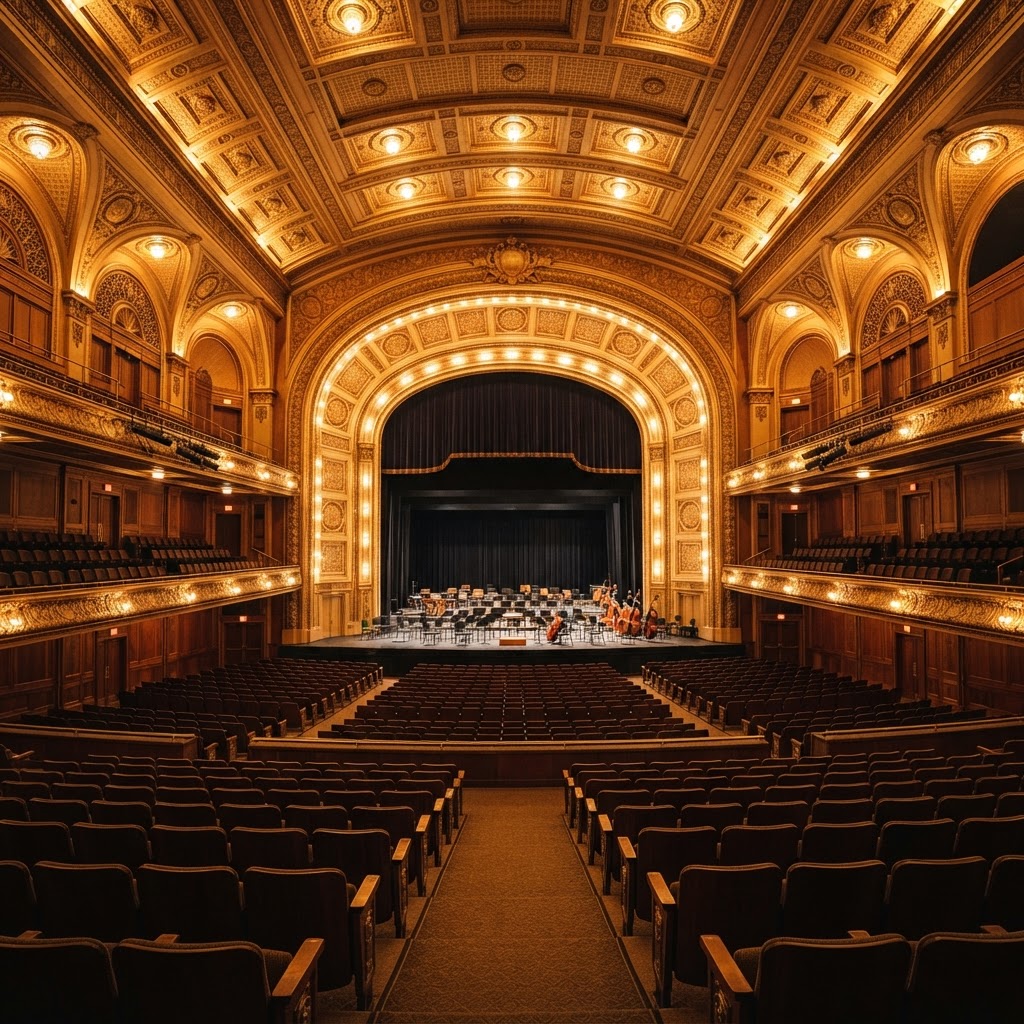
Chicago, USA
Symphony Center
YOUR EXERCISE HERE
Grab a seat in the center of the gallery and shut your eyes while the orchestra is playing. Listen for how a single instrumental note reaches your ears directly, then pay attention to the 'bloom' that follows as the sound reflects off the side walls to create that sense of space.
Free Listening Worksheet
5 questions on sound & music (2 fill-in-the-blank). Take it to the venue.
Get the six cheat sheets — free
One page each for room acoustics, gain structure, live sound, mixing, mic placement and guitar setup. The numbers and the moves, nothing else.
No spam. Unsubscribe anytime.
You Just Read the Free Version.
The full Sound Check course turns this into a system — 8 modules, 6 hours, a room that finally sounds right.
ENROLL NOW — $97