LIVE SOUND
Stop Fiddling and Start Placing: A Pro's Guide to Mic Placement
I have spent four decades on the road and in the studio. Here is the no-nonsense approach to getting great sound at the source before you ever touch an EQ knob.
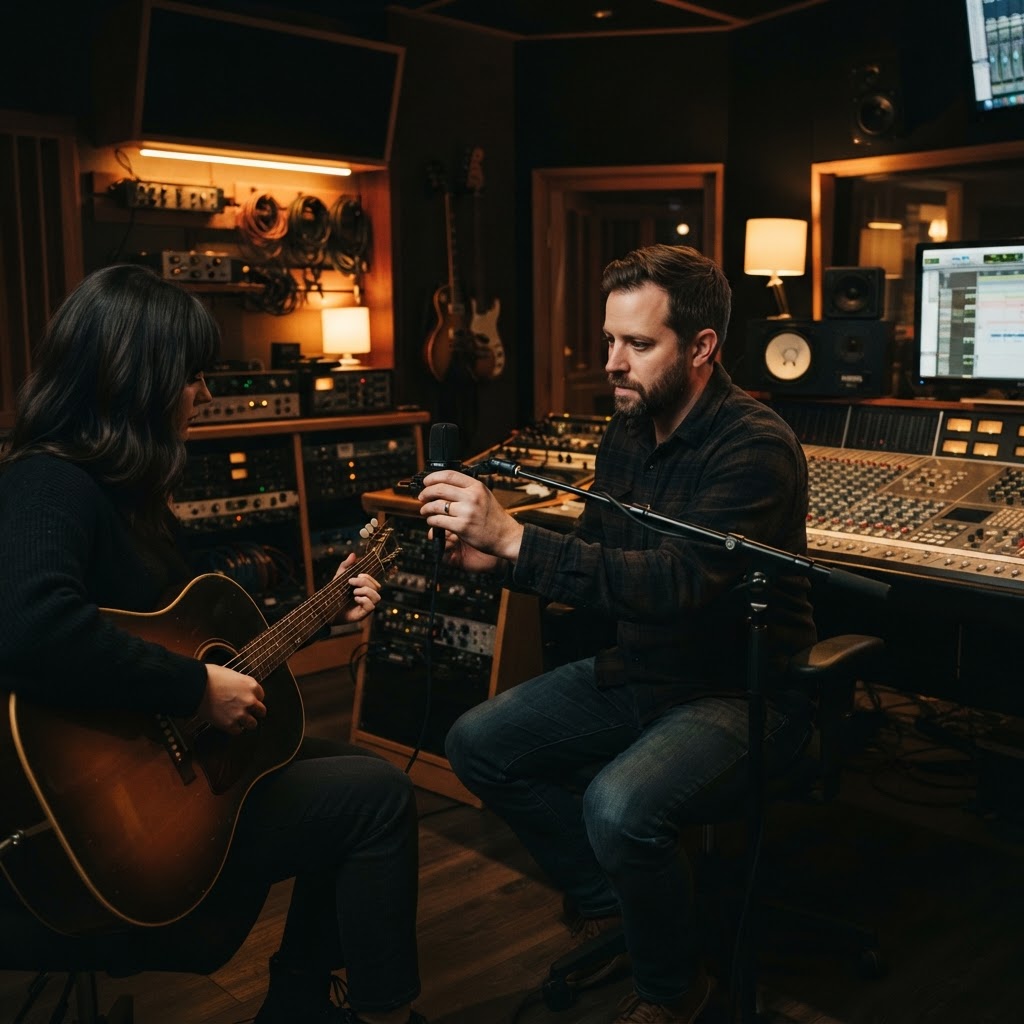
After forty years behind a mixing console, I have seen a lot of beginners treat a microphone like a magical wand. They spend twenty minutes tweaking plugins when the real problem is three inches away from the guitar amp. If the source sound isn't hitting the capsule correctly, no amount of digital processing will save you. Let’s get back to basics. The Proximity Rule and Off-Axis Rejection First, understand that distance is your primary volume control and frequency shaper. If you are miking a vocal, the closer the singer gets, the more 'proximity effect' you get—that heavy bass boost that radio DJs love. But be careful. Get too close without a pop filter, and your plosives (those hard 'P's and 'B's) will turn into sonic cannon fire. Start with the mic at least a fist-width away. If you need more body, move it in. If it sounds muddy, back it off. Also, remember that most dynamic mics have a 'sweet spot' dead center. If the singer is moving around, they are going to drift off-axis, which usually rolls off the high end and ruins the clarity of the consonants. If your vocalist is a 'floater' who can't stand still, grab a wider-pattern microphone or compression is going to be your best friend. Where the Amp Meets the Air Guitar amps are the biggest culprits for bad mic placement. Beginners almost always point the mic directly at the center of the dust cap, right at the middle of the speaker cone. That is the brightest, harshest part of the speaker. It sounds like bees buzzing in a tin can. Instead, move that mic toward the edge of the dust cap where it meets the cone. You will get a balanced, natural sound that needs very little EQ. If the guitar sounds too thin, angle the mic slightly away from the center. If it sounds like mud, move it closer to the center. It is all about the relationship between the capsule and the cone's movement. You aren't just capturing the amp; you are capturing the air moving off the speaker. Use Your Ears, Not Your Eyes I tell my students in the 'Sound Check with Bob' course to stop looking at the screen and start using their ears. Before you even unmute the channel, put on your closed-back headphones. Move the mic while someone plays or sings. Listen to how the phase changes as you shift the mic even an inch. You will hear the sound open up or close down. That is your training ground. Don't worry about 'textbook' angles. If it sounds good in the room, it will sound good in the mix. We get paid to make things sound right, not to look like we are following a manual. Spend the time getting the mic in the right spot during setup, and your soundcheck will go from a stressful ordeal to a smooth walk in the park. Trust your instincts, be patient with the placement, and your tracks will thank you later.
EAR-TRAINING FIELD TRIP
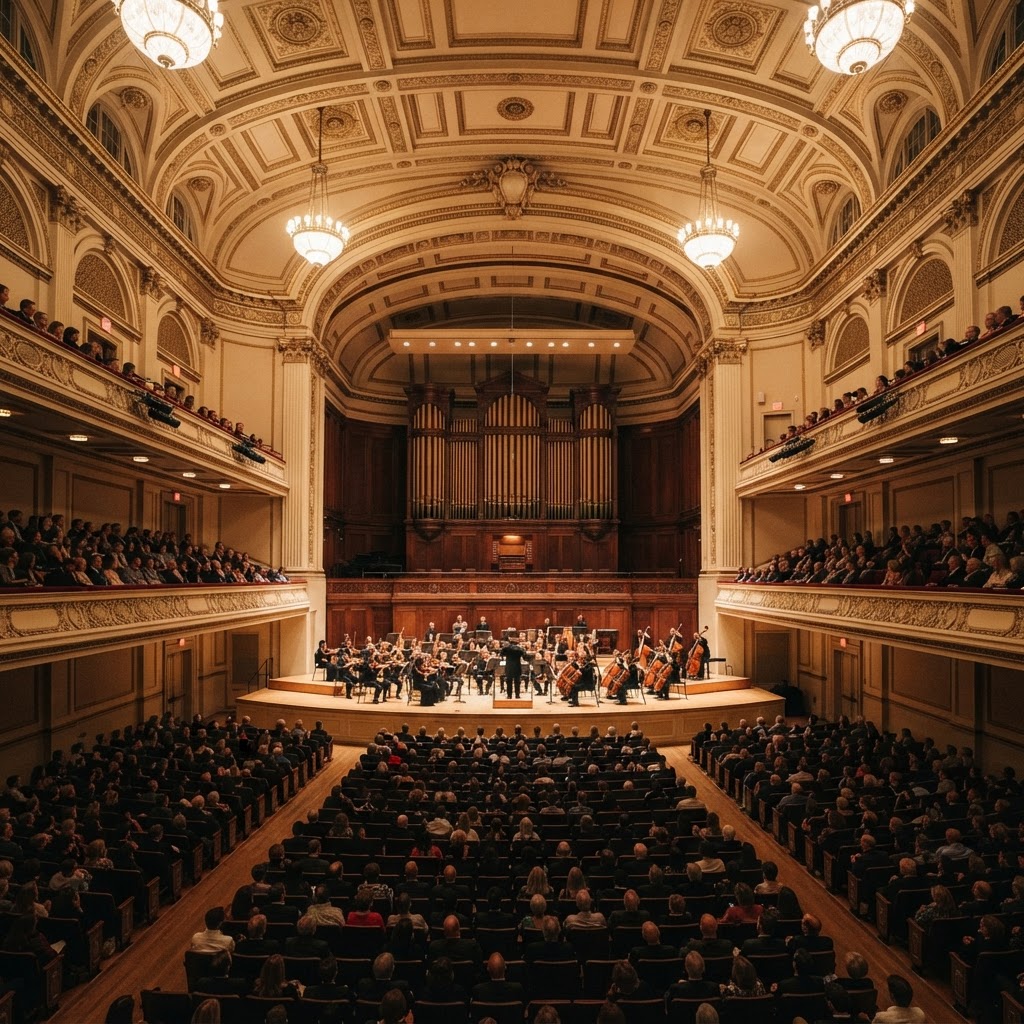
Boston, MA, USA
Symphony Hall
YOUR EXERCISE HERE
Find a seat in the middle of the orchestra section and close your eyes during a quiet passage. Listen specifically for how the sound of the strings decays against the coffered ceiling, and try to identify the exact moment the natural reverberation of the room takes over from the direct sound of the instruments.
Free Listening Worksheet
5 questions on sound & music (2 fill-in-the-blank). Take it to the venue.
Get the six cheat sheets — free
One page each for room acoustics, gain structure, live sound, mixing, mic placement and guitar setup. The numbers and the moves, nothing else.
No spam. Unsubscribe anytime.
You Just Read the Free Version.
The full Sound Check course turns this into a system — 8 modules, 6 hours, a room that finally sounds right.
ENROLL NOW — $97