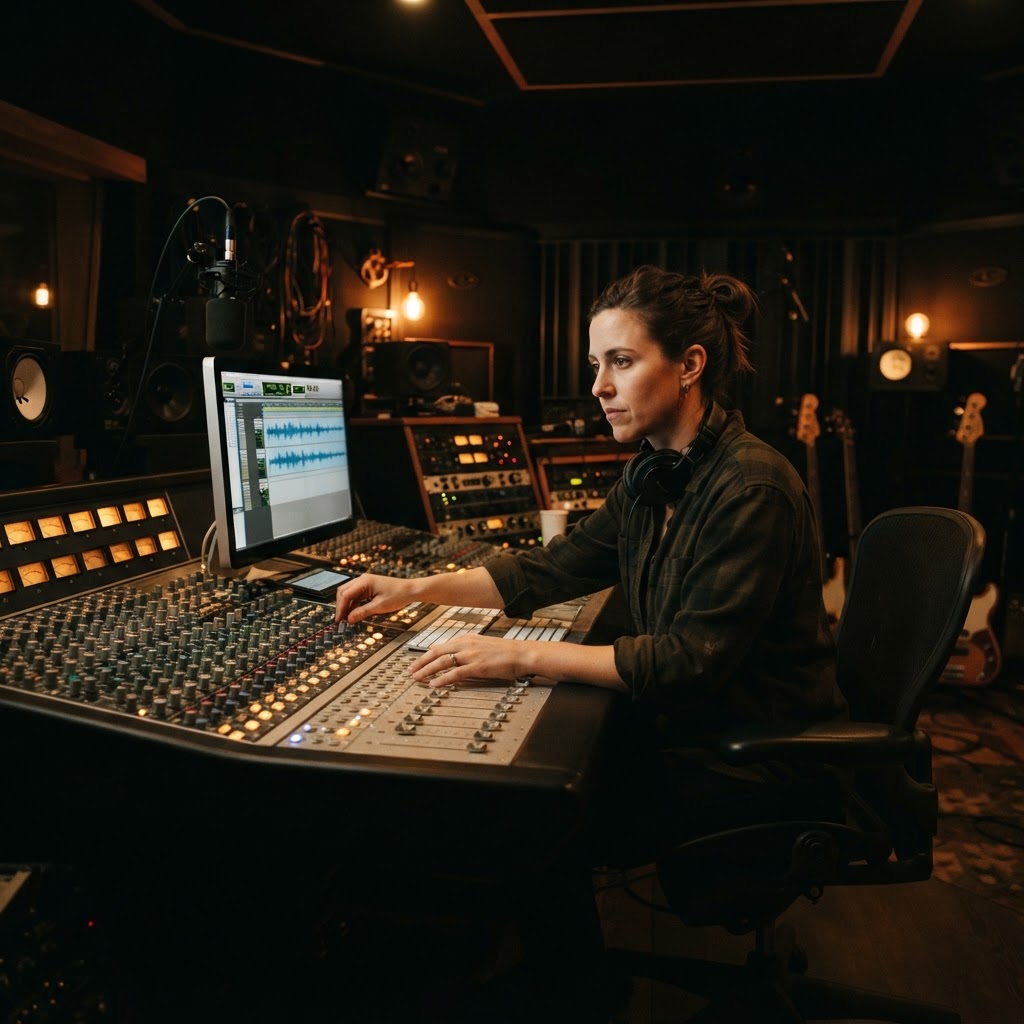
LIVE SOUND
Stop Listening to Equipment and Start Listening to People
After 40 years in the booth, I've learned that mixing isn't about the gear—it's about understanding how your audience perceives sound.
Listen, I get it. You spent half your paycheck on that new console, and you want to hear every crisp detail of the high-end. But after four decades of mixing everything from dive bar blues bands to major corporate events here in Scottsdale, I have a hard truth for you: nobody at your show cares about your signal chain. They care about how the sound makes them feel. If you want to elevate your craft, you need to stop acting like a technician and start acting like a psychologist.
The Ego Trap of the 'Perfect' Mix
We all fall into the trap of mixing for ourselves. You carve out a perfect notch in the EQ for the snare drum, you compress the vocal until it’s surgically tight, and you think, 'Man, that sounds technicality perfect.' The problem? The audience isn't sitting at the mixing desk. They are moving through the room, they are talking to their friends, and they are distracted. If your mix is too clinical, it lacks the soul required to hold their attention. You have to learn to leave space for the 'human element.' Sometimes a slightly messy, raw mix connects better than a polished one because it feels alive. Don't let your desire for perfection kill the vibe.
The Psychology of Fatigue
Have you ever noticed that by the end of a long show, the mix seems to get harsher? That’s not just the gear heating up; that’s ear fatigue. Your audience is experiencing the same phenomenon. If you hammer them with constant, ear-splitting highs and heavy mid-range density for two hours, their brains will literally start to shut down. They stop listening and start trying to escape the noise. My best advice? Use volume as a narrative tool, not a constant state. Bring the intensity down during the verses and save the full-range sonic punch for the choruses. If you give their ears a break, they will be much more receptive when you finally crank it up.
Reading the Room's Energy
I always tell my students in the 'Sound Check with Bob' course: look at the crowd, not just the meters. Are people leaning in, or are they leaning back with their hands over their ears? If the room is sparse, the sound travels differently, and people are more sensitive to harsh frequencies. If the room is packed, the bodies absorb the bass, and you might need to lean in a bit harder. Your job is to act as a bridge between the performer and the listener. You aren't just adjusting faders; you are managing the collective mood of the room. When you see someone nodding their head, you’ve done your job. When you see them checking their phone, you’ve lost the connection. Stay present, stay observant, and trust your gut over your scope.
EAR-TRAINING FIELD TRIP

Nashville, TN, USA
Ryman Auditorium
YOUR EXERCISE HERE
Find a seat in the balcony and close your eyes during the opening act. Instead of focusing on the lyrics, try to isolate the natural decay of the snare drum or the way the room's wooden pews color the low-end frequencies of the bass guitar.
Free Listening Worksheet
5 questions on sound & music (2 fill-in-the-blank). Take it to the venue.
Get the six cheat sheets — free
One page each for room acoustics, gain structure, live sound, mixing, mic placement and guitar setup. The numbers and the moves, nothing else.
No spam. Unsubscribe anytime.
You Just Read the Free Version.
The full Sound Check course turns this into a system — 8 modules, 6 hours, a room that finally sounds right.
ENROLL NOW — $97