LIVE SOUND
Stop Overthinking: Essential Mixing Fundamentals for Beginners
After 40 years behind the console, I have learned that great mixing is about subtraction, not addition. Let’s strip away the technical jargon and focus on what actually makes a mix sit right.
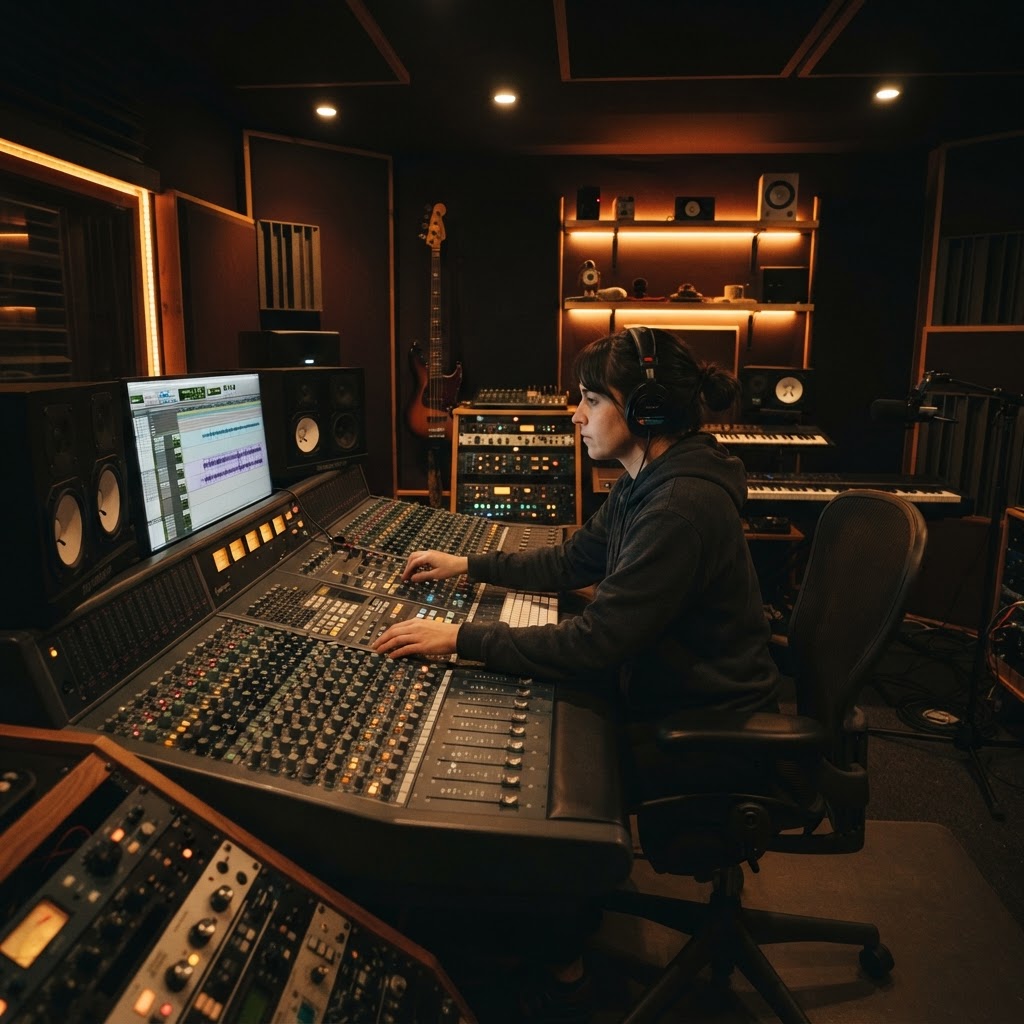
Welcome to the booth. If you have been staring at a mixing console or a DAW lately, feeling overwhelmed by the sheer number of knobs and plugins, take a breath. I have been doing this for over four decades in Scottsdale and beyond, and I can tell you that most beginners lose their way by trying to 'fix' things that were never broken to begin with. You do not need a degree in physics to get a great sound. You just need to listen. Start with the Gain Stage The biggest mistake I see beginners make isn't about EQ or compression; it is poor gain staging. If your input signal is clipping at the preamp, you are already fighting a losing battle. My rule is simple: keep your signals healthy, not hot. Aim for a solid, consistent level that gives your faders plenty of headroom. If you cannot get a good sound out of your channel strip with the EQ bypassed, you are choosing the wrong microphone or the wrong instrument position. Fix the source, not the processing. Subtract to Add When you start mixing, your instinct is to push faders up to make things sound 'bigger.' Try the opposite. Focus on subtractive EQ. Instead of boosting the high-end on every single track, look for the mud in the 200Hz to 400Hz range and cut it. If your kick drum and bass guitar are fighting, clear some space for the kick and let the bass wrap around it. A mix is like a room with limited space; if you cram too much in, you are just going to create clutter. By cutting out the frequencies that don't need to be there, the instruments that actually matter will stand out naturally. The Magic of Balance Before you reach for a compressor or a reverb plugin, get your balance right using only faders and panning. If a song sounds good with just the faders pushed up, you have won half the battle. Pan your instruments to create a sense of width, but don't overdo it. If you have a lead vocal, keep it center. If you have two guitars, pull them out slightly to the sides. Use the pan pot to create space so that each instrument has its own 'home' in the stereo field. Only after you have a solid balance should you start applying effects. If the song does not work in mono, it certainly won't work in stereo. Work on your ears, keep your signal path clean, and remember that sometimes the best move you can make is turning a volume knob down. Keep practicing, trust your gut, and don't be afraid to keep it simple.
EAR-TRAINING FIELD TRIP

Nashville, TN, USA
Ryman Auditorium
YOUR EXERCISE HERE
Find a seat in the middle of the floor and close your eyes during the soundcheck. Listen specifically for how the natural resonance of the wooden pews and plaster walls colors the sound before the PA system even kicks in, then notice how the engineer balances that room tone with the amplified signal.
Free Listening Worksheet
5 questions on sound & music (2 fill-in-the-blank). Take it to the venue.
You Just Read the Free Version.
The full Sound Check course turns this into a system — 8 modules, 6 hours, a room that finally sounds right.
ENROLL NOW — $97