
AI & AUDIO
The One Plugin I Use on Every Session (and Why You Probably Don't Need It)
Forty years in, there's exactly one tool I load on every single session — and after using it for a decade, I still think most of you shouldn't buy it. Here's why.
People ask me all the time: "Bob, if you could only keep one plugin, what would it be?" The honest answer surprises them, because after forty years and a decade of using this particular tool on literally every session, my next sentence is usually: "…and you probably don't need it."
The plugin is iZotope RX. The audio repair suite. I use its De-click, De-noise, De-plosive, and the spectral repair brush on every session that comes across my desk — cleaning up live recordings, salvaging bad room sound, rescuing a single syllable a singer blew. It's the most useful piece of software I own.
Why Most of You Don't Need It
Here's the part the marketing won't tell you: if your recordings are clean, RX is a waste of your money and your time. RX is a rescue tool. It exists to fix things that went wrong. If you're recording in a treated space, with good gain staging, on a decent mic, you will rarely need 80% of what RX does. And if you reach for it constantly, that's not a plugin problem — that's a recording problem you should fix at the source.
I use it on every session because half my work is rescue work — live recordings, archival transfers, podcasts recorded in closets. If your work is clean studio tracking, spend that money on a better mic or room treatment. You'll get further.
The Two RX Tools Worth Knowing Anyway
Even if you never buy it, understand what these do, because they've changed how we think about audio:
De-plosive. Removes the thump of a "P" or "B" hitting a mic, without re-recording. It's saved more vocal takes than any other single feature in modern audio. Learn what a plosive is and you'll mic better to avoid them in the first place.
Spectral repair. Lets you see sound as a picture and paint out a cough, a siren, a click. It's the closest thing to magic in audio. And it teaches you, visually, what frequency content actually looks like — which makes you a better mixer whether you own it or not.
The Real Lesson
The tool I use most isn't a compressor, an EQ, or a fancy saturator. It's a repair tool. Because the best mix starts with a clean recording, and a huge amount of professional work is quietly undoing what went wrong at the source. Master your gain staging, your mic placement, and your room, and you'll need RX the way I need a fire extinguisher — glad it's there, hoping not to use it.
The Field Trip
Go sit in a hall famous for clarity and notice the absence of noise — no hum, no rattle, no room roar. The cleanest recording is the one that needed the least fixing. Train your ear to want that silence, and you'll record toward it without thinking.
EAR-TRAINING FIELD TRIP
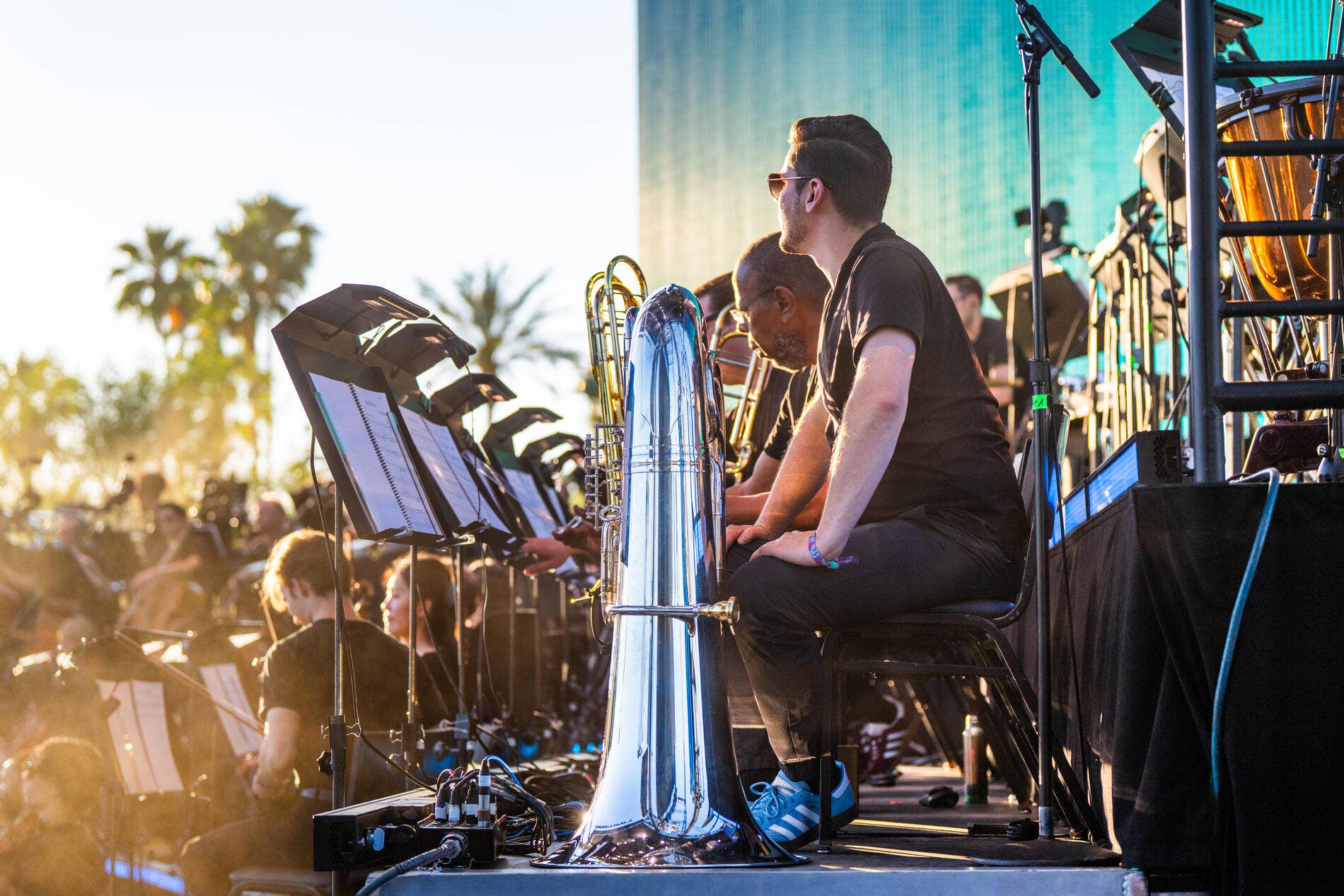
Los Angeles, USA
Walt Disney Concert Hall
YOUR EXERCISE HERE
Find a seat in the orchestra section and listen to the silence *between* the music. Walt Disney Concert Hall is famous for how little ambient noise the room adds — that low noise floor is exactly what RX is trying to restore when it cleans a recording, and exactly what you should chase at the source instead.
Free Listening Worksheet
5 questions on sound & music (2 fill-in-the-blank). Take it to the venue.
You Just Read the Free Version.
The full Sound Check course turns this into a system — 8 modules, 6 hours, a room that finally sounds right.
ENROLL NOW — $97