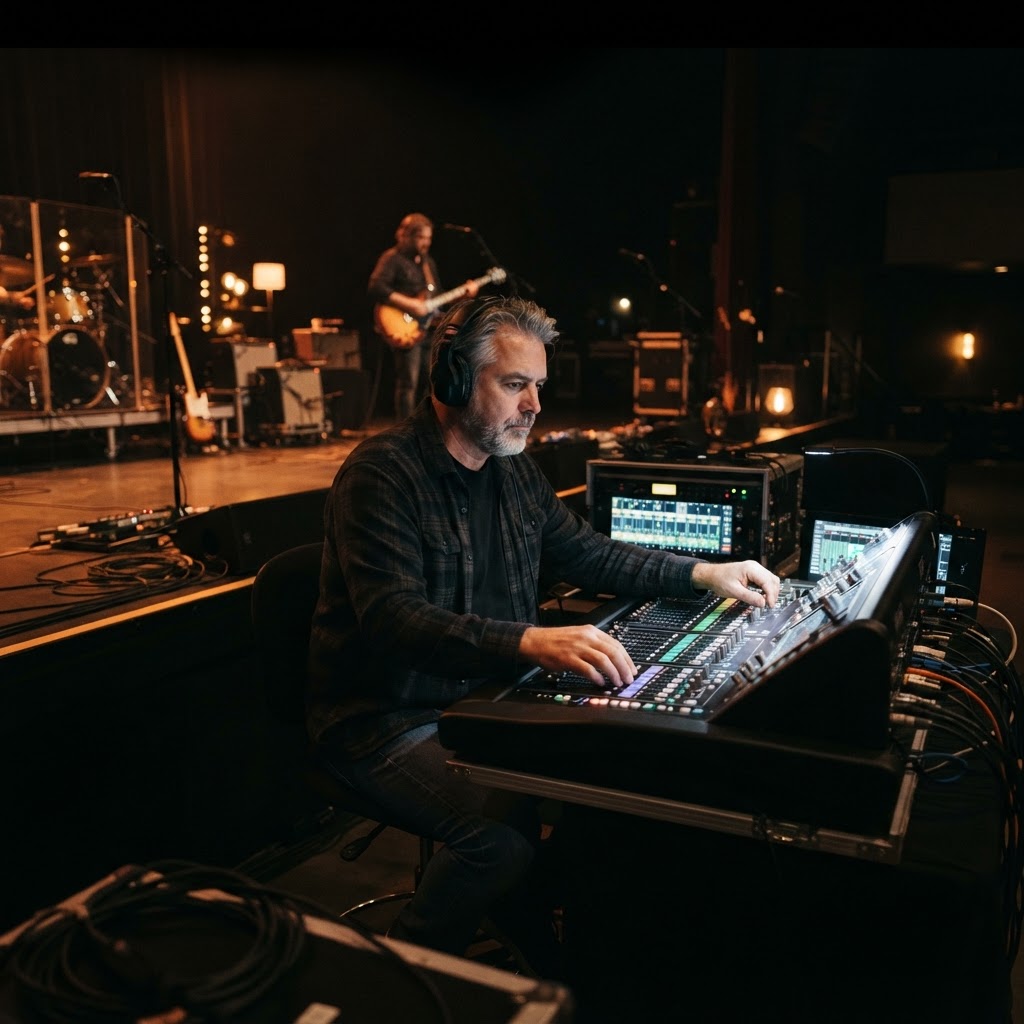
LIVE PERFORMANCE
The Scottsdale Standard: A Veteran’s Routine for a Flawless Sound Check
Veteran sound engineer Bob Williams shares his battle-tested, 40-year routine for mastering the stage before the first note is even played.
I’ve spent the better part of forty years behind a mixing console, many of them right here in the dry heat of Scottsdale, Arizona. I’ve seen every kind of disaster you can imagine—from power surges in dive bars to lead singers who think a sound check is a personal concert. If you’re just starting your journey into live sound, let me give you the best piece of advice I’ve ever received: the show is won or lost before the first fan walks through the door.
Sound check isn’t just a technical necessity; it is the moment you establish authority and trust. When you walk into that venue, you are the pilot. The band needs to know that you have their backs, and the audience needs to know they’re in for a good night. Over the decades, I’ve refined a routine that I now teach in my 'Sound Check with Bob' course. It’s simple, it’s repeatable, and it works every single time.
Get Your House in Order Before the Band Arrives
One of the biggest mistakes I see new engineers make is waiting for the band to show up before they start working. If you’re plugging in cables while the drummer is trying to set up his throne, you’re already behind. I always get to the venue at least ninety minutes early. This is what I call 'The Silent Check.' During this time, I’m checking every signal path. I’m physically walking the stage, checking for frayed cables, and ensuring that every microphone is positioned exactly where I want it.
I’m also checking the gain levels on the board to make sure nothing is peaked from the night before. I also play a reference track—something I know inside and out—through the house system. This tells me how the room is reacting today. Is the humidity in Scottsdale making the high end sound brittle? Is the room echoing more because it’s empty? You need to know the 'sound' of the room before you add a single instrument to the mix. If the room is boomier than usual, I’ll tweak the master EQ now so I'm not fighting it later.
Build the Foundation One Brick at a Time
Once the band is set and tuned, it’s time to start the line check. Never, under any circumstances, let a band just start playing all at once. It’s chaos, and you’ll spend twenty minutes chasing your tail. You need to be the conductor. Start with the kick drum. I want a solid, punchy 'thud' that anchors the room. Then move to the snare, the toms, and the overheads. Listen for phase issues—if the snare sounds thin, flip the polarity.
Once the drums are dialed, bring in the bass. The relationship between the kick drum and the bass guitar is the most important part of any mix. They have to live together without fighting for the same frequencies. Use your high-pass filters aggressively on everything that isn't a kick or a bass. This cleans up the mud and leaves room for the vocals to breathe.
When you get to the vocals, this is where you earn your paycheck. Have the performers sing the loudest part of their most energetic song. If they just say 'check, one, two' at a whisper, your gain will be all wrong the moment the first chorus hits. Dial in the vocals so they sit right on top of the mix, clear and present. By the time I bring the guitars and keys in, I already have a stable foundation. I’m just painting color onto a solid house.
The Monitor Secret: Less is Almost Always More
If you want to have a miserable night, give the band everything they ask for in their monitors. They’ll ask for more kick, more guitar, and more of themselves until the stage volume is louder than the front-of-house speakers. This is a recipe for feedback and a muddy mess in the audience. I always tell my students: the monitors are for what the musicians need to hear to stay in time and in tune, not what they want to hear for fun.
If the guitar is too quiet for the singer, see if you can turn the drums down in their wedge first. Keeping the stage volume low gives you, the engineer, the headroom you need to make the house mix sparkle. Communication is your secret weapon. Speak clearly into your talkback mic. Be encouraging but firm. If the guitar player is noodling while you’re trying to check the vocals, politely ask them to stop. You are there to make them sound like stars, and they need to respect the process. Once the individual channels are set, have the band play two songs—one fast and loud, one slow and quiet. That’s your final chance to tweak the dynamics before the doors open.
A great mix starts with a clear plan and ends with a happy crowd.
EAR-TRAINING FIELD TRIP

Nashville, TN, USA
Ryman Auditorium
YOUR EXERCISE HERE
Find a seat in the middle of the floor and close your eyes during the sound check. Listen specifically for how the hardwood floors and curved pews diffuse the high-frequency reflections, creating a natural, warm decay that you rarely find in modern, carpeted venues.
Free Listening Worksheet
5 questions on sound & music (2 fill-in-the-blank). Take it to the venue.
You Just Read the Free Version.
The full Sound Check course turns this into a system — 8 modules, 6 hours, a room that finally sounds right.
ENROLL NOW — $97