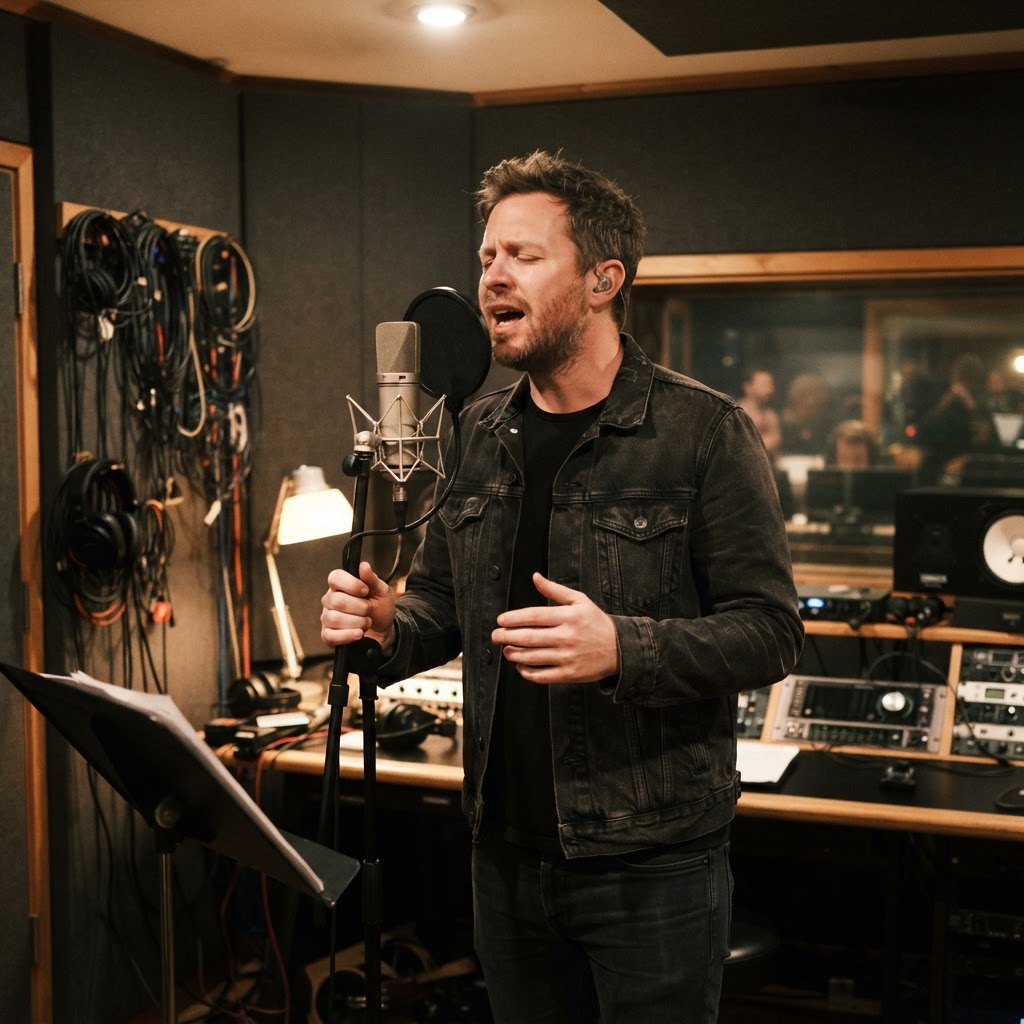
HOME STUDIO
The Veteran’s Guide to AI: How to Use High-Tech Tools Without Losing Your Soul
Bob Williams shares how to integrate modern AI tools into your workflow while keeping the human touch that makes music worth listening to.
Hey there. Welcome to the studio. Grab a seat, maybe a coffee. I’ve spent more than four decades behind a mixing console, starting back when we had to use razor blades to edit tape and pray we didn’t lose the only copy of a vocal take. I’ve seen the transition from analog to digital, and I’ve heard every argument about how the 'new thing'—be it Autotune, plugins, or DAWs—is going to ruin the sanctity of music. Now, it’s AI’s turn in the spotlight. Out here in Scottsdale, the heat is usually what keeps us inside, but lately, it’s been the excitement—and a bit of confusion—surrounding AI tools in music production. If you’re just starting out, don’t listen to the doomsayers. AI isn't here to replace you; it’s here to be the best intern you’ve ever had.
Fixing the Unfixable
In my early days, if a drummer’s squeaky pedal or a stray dog barked during the perfect vocal take, we were in real trouble. We either lived with it or started over from scratch. Today, tools like iZotope RX use machine learning to 'see' the sound in a spectral view. You can literally paint out a siren in the background of a podcast or remove the hum from a vintage amp without touching the tone of the guitar. For a beginner, this is a superpower. You don’t need a multi-million dollar treated room to get clean tracks anymore. My advice, though? Don't overdo it. Just because you can remove every breath and lip smack doesn't mean you should. Music needs to breathe, and sometimes those 'imperfections' are what tell the listener a human being was actually in the room. If it sounds too clinical, you've gone too far.
The Power of Stem Separation
One of the coolest developments I’ve seen recently is AI-powered stem separation. Tools like Lalal.ai or the features found in RipX let you take a finished song and split it into vocals, drums, bass, and other instruments. Back in the 80s, we would have killed for this technology. For a student of sound, this is an incredible learning tool. Want to hear exactly how a legendary engineer compressed a vocal? Isolate it. Want to study the pocket and timing of a specific bass line in a dense mix? Pull it out and listen to it in solo. This isn't just for remixing; it's for education. By deconstructing the greats, you learn the architecture of a hit. Just be careful with the legal side—use it to learn and practice, but don't go releasing other people's stems as your own work.
The Smart Assistant in Your DAW
Let’s talk about mixing. I teach the 'Sound Check with Bob' course because I believe your ears are your most important asset, and they need training. However, when you’re staring at a blank EQ curve and feeling stuck, AI-powered plugins like Ozone’s Master Assistant or Sonible’s smart:EQ can give you a solid starting point. These tools analyze your audio and suggest a frequency balance based on thousands of successful records. Use them as a reference. If the AI suggests a 3dB boost at 5kHz, ask yourself why it did that. Does it actually sound better, or is the AI just following a generic template? Use these tools to learn how to hear, not just to finish a project quickly. It’s like having a senior engineer leaning over your shoulder saying, 'Hey, maybe check the low-mids.' Take the suggestion, then make it your own. In the end, your taste is what people are paying for, not the algorithm's math.
Keeping the Heart in the Mix
The biggest trap I see beginners fall into is letting the computer make all the creative decisions. There are AI tools now that can generate melodies, chords, and even full arrangements. While that’s fun for a hobby, real music is about connection. An algorithm doesn't know what it feels like to have your heart broken or to be so happy you want to shout. It only knows mathematical patterns and probabilities. Use AI to handle the technical drudgery—noise removal, basic leveling, or stem separation—so you have more mental energy for the art. If you let the AI do the heavy lifting of the songwriting, you're missing out on the best part of being a musician. In my forty years, the tracks that stick with people are the ones that have a bit of a soul, even if they aren't technically perfect.
Don’t be afraid of the technology, but don’t serve it either. It’s just another tool in the box, like a compressor or a vintage reverb tank. Keep your ears sharp, keep your heart involved, and use these new toys to clear the path for your own unique voice. You’ve got something to say that no machine ever could.
Just remember: the machine works for you, not the other way around.
EAR-TRAINING FIELD TRIP
Nashville, TN, USA
Ryman Auditorium
YOUR EXERCISE HERE
Find a spot in the pews midway back and close your eyes during the opening act. Listen for how the natural wood reflections carry the mid-range frequencies without the harshness you often get from a poorly tuned AI-simulated room.
Free Listening Worksheet
5 questions on sound & music (2 fill-in-the-blank). Take it to the venue.
You Just Read the Free Version.
The full Sound Check course turns this into a system — 8 modules, 6 hours, a room that finally sounds right.
ENROLL NOW — $97