LIVE PERFORMANCE
Why Your Ears Are Lying To You (And How To Fix It)
Learn how to overcome cognitive bias and listener fatigue so you can make better mixing decisions in any room.
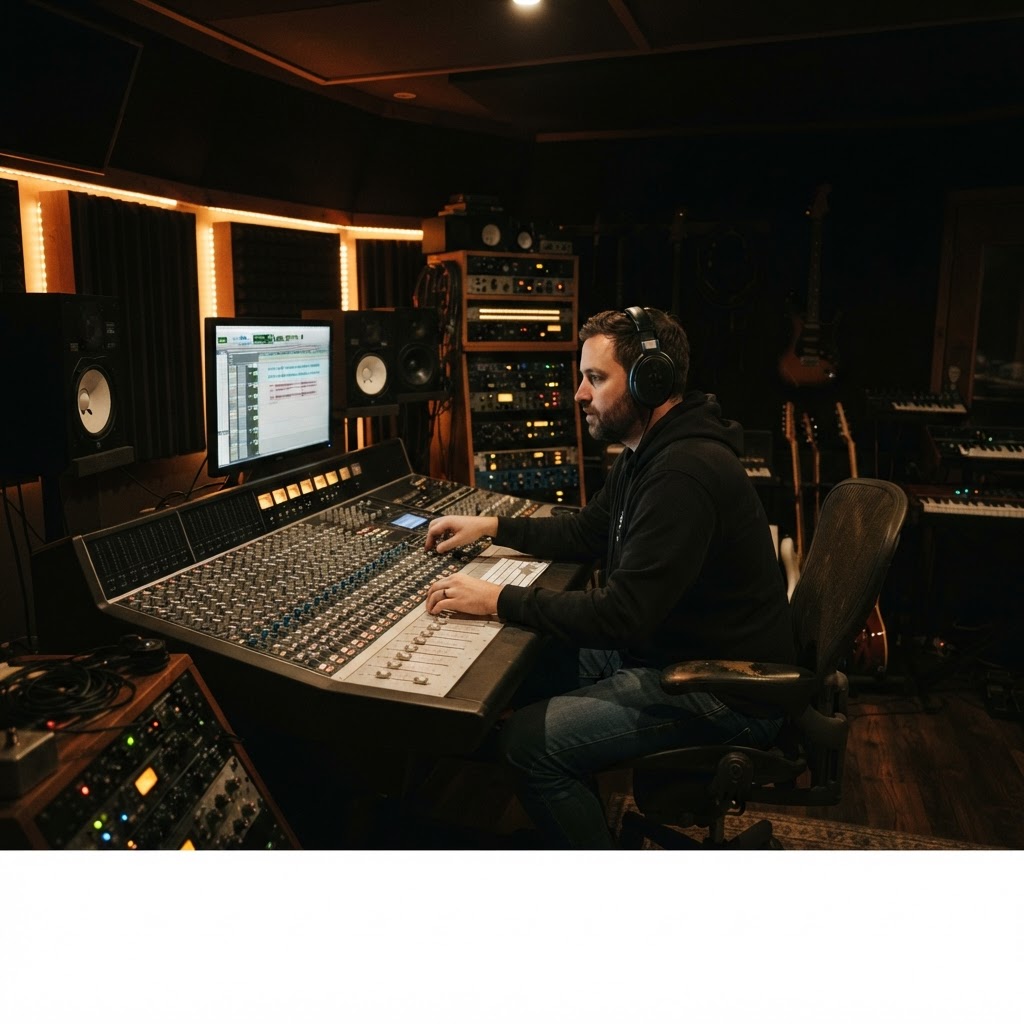
Listen, I’ve been behind a console for over forty years, and if there is one thing I’ve learned, it’s that your brain is the worst part of your audio signal chain. We like to think of ourselves as objective, but the human ear is easily fooled. When you are in the middle of a soundcheck or a gig, your brain is actively 'filling in the blanks' based on what it expects to hear, not necessarily what is actually coming out of the speakers. This is called auditory adaptation. After ten minutes of hearing a mix, your brain decides that the current state is 'normal' and stops alerting you to harsh high frequencies or muddy low-end build-up. The Five-Minute Reset Rule To combat this, you have to force a reset. Every time I’m at a gig in Scottsdale, I force myself to step away from the desk every twenty minutes. Even if it's just to walk to the back of the room for thirty seconds. When you return to the desk, don't touch the faders immediately. Just listen. Your brain will suddenly point out exactly what is wrong—maybe the vocals are too boxy or the drums are swallowing the room. If you stay glued to the chair for an hour, your brain will lie to you and convince you the mix is perfect. It never is. Context Over Equipment Beginners obsess over plugins and preamps, but the psychology of listening is about context. If you mix a song while you are tired, hungry, or frustrated, your brain is wired to interpret sound differently. When you are stressed, your ears actually become more sensitive to high frequencies as a primitive 'fight or flight' response. That is why your mixes sound bright and thin when you are having a bad day. Always calibrate your ears before you start. Listen to a track you know inside and out—something with a balanced, commercial mix—at a moderate volume. If that reference track sounds 'off,' then your ears are currently biased. Don't touch a single EQ knob until the reference track sounds like you expect it to. Once the reference sounds right, your brain is calibrated and you can start working on your own project. Embrace The Subjectivity Don't fight the fact that hearing is subjective; use it. We listen to music for emotion, not math. If you are mixing a ballad, you need to be in a different headspace than when you are mixing high-energy rock. Ask yourself: what emotion does this part need to convey? If you find yourself over-analyzing the frequencies, stop. Close your eyes. When you remove the visual distraction of meters, faders, and plugins, your brain is forced to process the audio through pure feeling. If the song makes you lean in or tap your foot, you are on the right track. If it makes you feel nothing, no amount of technical precision will save it. Keep your ears fresh, respect your own cognitive bias, and never trust a mix you haven't stepped away from for at least ten minutes. You have better ears than you think, you just have to give them a chance to tell the truth. Your best mix isn't the one that is technically perfect, but the one that makes the listener feel something real.
EAR-TRAINING FIELD TRIP

Los Angeles, CA, USA
Walt Disney Concert Hall
YOUR EXERCISE HERE
Close your eyes during a quiet passage and focus entirely on the decay of the final note. Listen for how the sound lingers in the space, specifically noting how the Douglas fir interior and the hall's unique geometry shape the 'ring' before it completely vanishes.
Free Listening Worksheet
5 questions on sound & music (2 fill-in-the-blank). Take it to the venue.
Get the six cheat sheets — free
One page each for room acoustics, gain structure, live sound, mixing, mic placement and guitar setup. The numbers and the moves, nothing else.
No spam. Unsubscribe anytime.
You Just Read the Free Version.
The full Sound Check course turns this into a system — 8 modules, 6 hours, a room that finally sounds right.
ENROLL NOW — $97