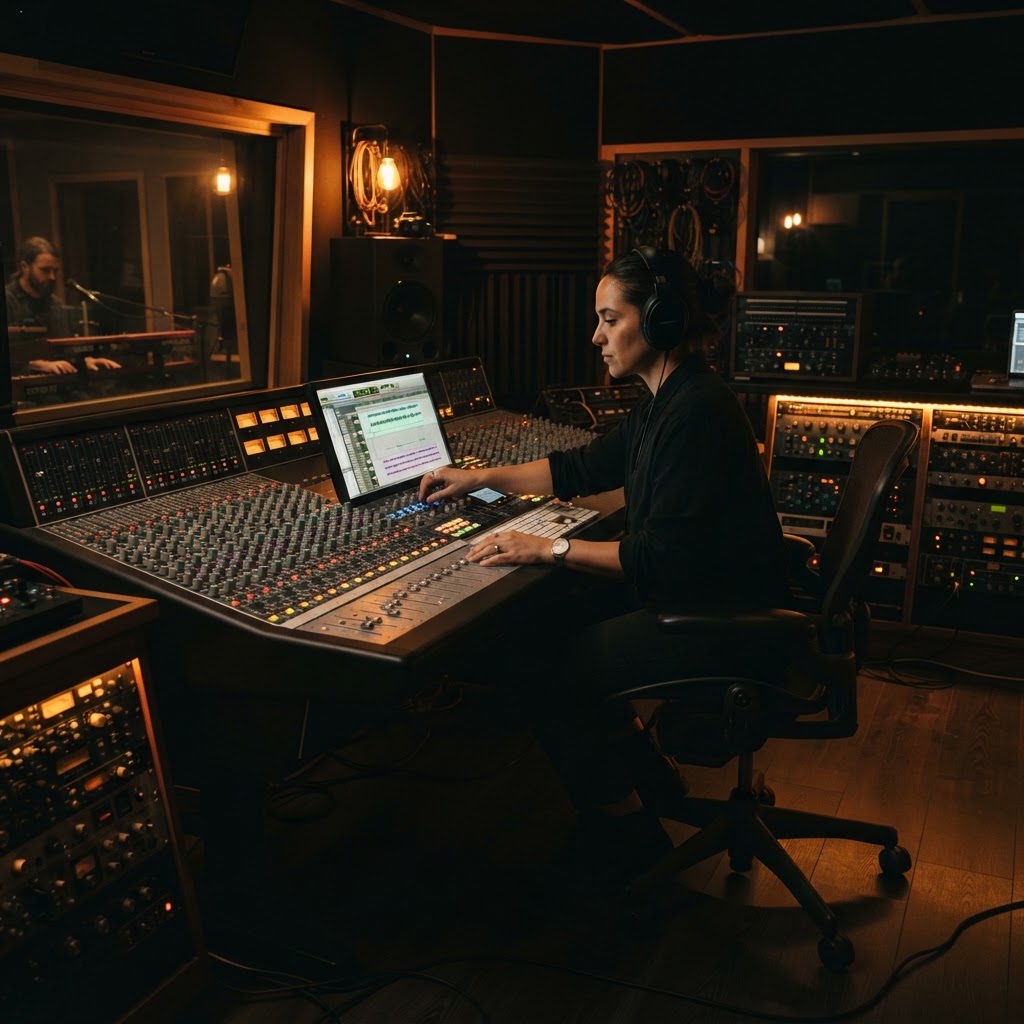
LIVE PERFORMANCE
Why Your Ears Are Playing Tricks On You: The Psychology of Live Sound
Forty years in the trenches have taught me that great sound isn't just about gear—it's about how your brain interprets the air moving in the room. Let's talk about the invisible side of audio engineering.
I’ve spent four decades behind a mixing console, from dusty dive bars in Phoenix to high-end venues in Scottsdale. You might think being a sound engineer is just about gain staging, frequency response, and knowing your way around a signal chain. Those things matter, but they are only half the battle. The other half? It’s all between your ears.
The 'Fletcher-Munson' Trap
Human hearing is not a flat, linear measurement device. We are notoriously bad at judging volume and frequency balance when our brains are tired or when we've been exposed to loud sounds for too long. This is the Fletcher-Munson curve in action—your ears become less sensitive to low and high frequencies as volume levels drop. Conversely, if you boost your highs because the room feels 'dead,' you’re actually just fatiguing your audience. My advice? Get your ears checked, and learn to trust your eyes on the RTA when you aren't sure if it's the room or your brain playing tricks on you.
Contextual Auditory Perception
Have you ever noticed that a mix sounds incredible in the rehearsal room but falls apart in the venue? That’s not just acoustics; that’s cognitive bias. Our brains categorize sounds based on what we expect to hear. If you walk into a venue expecting it to sound muddy, you’ll focus on the mud. As an engineer, you have to actively reset your auditory 'baseline' every single soundcheck. Step away from the console. Walk to the back of the room. Close your eyes and listen to the band without the visual distraction of the lights and the gear. What you hear when you aren't looking at a screen is the truth.
The Emotional Connection
Technical perfection is fine, but it rarely moves an audience. People don't remember the exact decibel level of your kick drum; they remember how the music made them feel. If you’re fighting the venue, the audience senses that tension. I’ve learned that a slightly imperfect mix that feels 'alive' and supportive of the performer is always better than a sterile, technically perfect mix that feels cold. Your job is to facilitate a connection. When the sound is right, the audience forgets you are even there, and that is the highest form of praise you can receive.
Stop over-analyzing the waveform and start listening for the story the music is trying to tell.
EAR-TRAINING FIELD TRIP

Nashville, TN, USA
Ryman Auditorium
YOUR EXERCISE HERE
Find a seat in the balcony and close your eyes during the first song to isolate the natural reverberation of the wooden pews and curved architecture. Notice how the sound doesn't just hit you from the stage, but seems to bloom around you, proving that the room itself is an instrument.
Free Listening Worksheet
5 questions on sound & music (2 fill-in-the-blank). Take it to the venue.
You Just Read the Free Version.
The full Sound Check course turns this into a system — 8 modules, 6 hours, a room that finally sounds right.
ENROLL NOW — $97