LIVE PERFORMANCE
Why Your Ears Deceive You: The Psychology of Listening in Live Sound
Learn how to overcome cognitive bias and listener fatigue so you can make better mix decisions in the heat of a live performance.
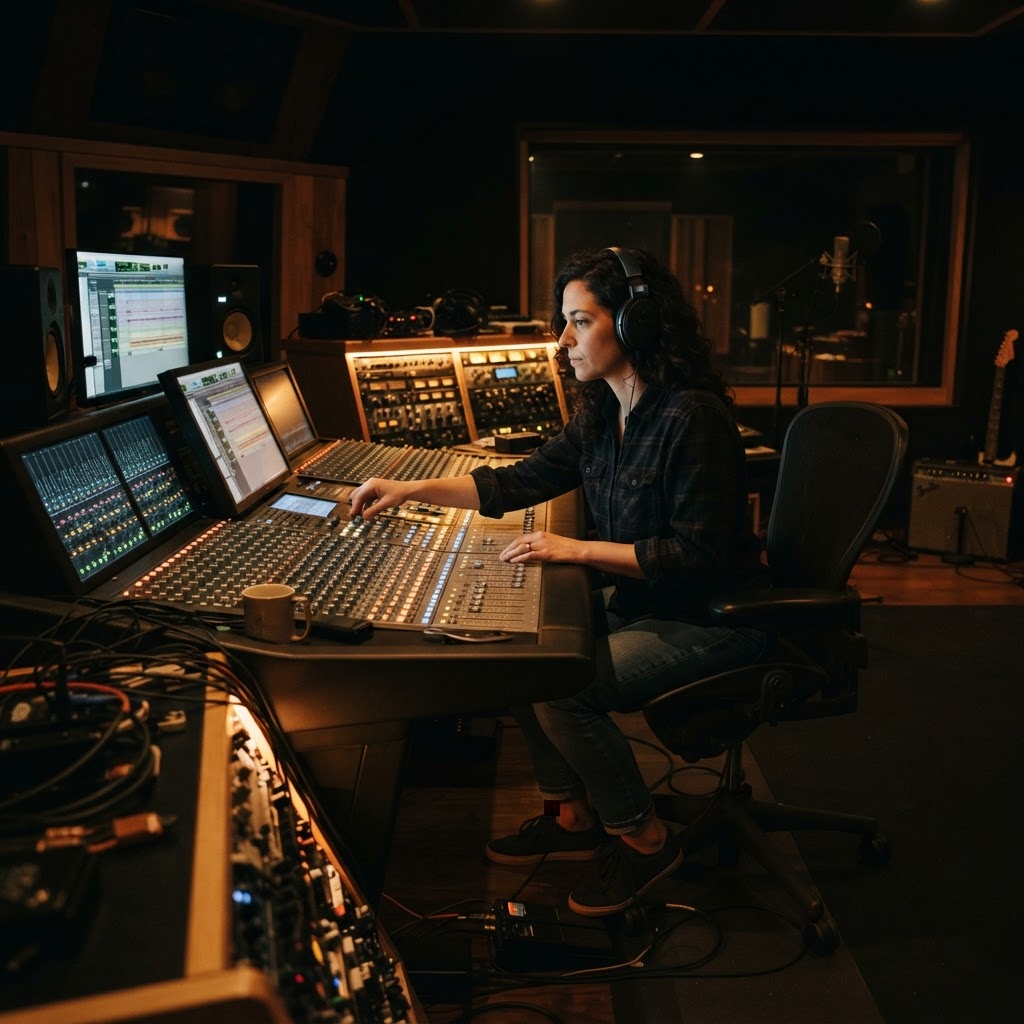
Look, I’ve spent over 40 years behind a mixing console, from dingy dive bars in Scottsdale to regional festivals. If there is one thing I’ve learned, it’s that your brain is the most important—and most unreliable—piece of equipment in your signal chain. We like to think of mixing as a purely technical endeavor, but the truth is, sound is fundamentally a psychological experience. If you don't understand how your brain processes audio, you’re just chasing faders in the dark. Beat the Fatigue Factor Ear fatigue isn't just about volume; it’s about focus. When you've been sitting in front of monitors for four hours, your brain starts to normalize the harsh frequencies. You stop hearing the 'bite' in the snare or the mud in the low-mids because your ears have essentially filed them away as background noise. The fix? Force a reset. Every hour, step away from the board for five minutes. Go outside, grab a water, and get away from the sound field. When you walk back in, your brain has to re-adjust. It’s during those first ten seconds after a break that you will hear the most critical, objective truths about your mix. If it sounds harsh the moment you sit down, trust your gut and pull back those high frequencies immediately. The Power of Expectation Bias There is a psychological phenomenon called expectation bias where your brain 'hears' what it expects to be there rather than what is actually coming out of the speakers. If you spent twenty minutes EQing a vocal to be bright and clear, your brain will trick you into believing it sounds great, even if it has actually turned into a brittle mess. To counter this, learn to A/B your changes aggressively. Bypass the plug-in or reset the EQ band entirely for a split second. If the mix didn't get better when you turned the effect on, take it off. Don't fight for a 'perfect' sound that exists only in your imagination. Treat the audience’s ears as the source of truth, not your own expectations. Manage Your Focus to Manage the Room In a live environment, you aren't just mixing audio; you're managing the room's energy. Psychologically, audiences respond to transparency. If the kick drum is muddy, they feel restless. If the vocals are buried, they feel disconnected. I teach my students in 'Sound Check with Bob' to stop focusing on the instruments in isolation. Instead, listen for the 'space.' A good mix feels like a single, cohesive unit. When you catch yourself obsessing over a single synth patch, zoom out. Close your eyes and imagine the music as a shape in the air. Does it feel balanced? Is it inviting the audience in, or pushing them away? Remember, the audience isn't analyzing your compression settings—they are feeling the music. If you are stressed and overthinking the technical specs, that energy bleeds into the mix. Stay calm, keep your listening objective, and let the music do the work. Your ears are the best tool you own, so learn to trust them—and more importantly, learn when to let them rest. You don't have to be perfect to be great, just be present.
EAR-TRAINING FIELD TRIP

Nashville, TN, USA
Ryman Auditorium
YOUR EXERCISE HERE
During a quiet moment or between songs, close your eyes and focus on the decay of the sound in the room. Listen for how the hardwood floors and curved pews interact with the high frequencies, and try to distinguish the natural reverberation of the space from the amplified sound coming through the speakers.
Free Listening Worksheet
5 questions on sound & music (2 fill-in-the-blank). Take it to the venue.
Get the six cheat sheets — free
One page each for room acoustics, gain structure, live sound, mixing, mic placement and guitar setup. The numbers and the moves, nothing else.
No spam. Unsubscribe anytime.
You Just Read the Free Version.
The full Sound Check course turns this into a system — 8 modules, 6 hours, a room that finally sounds right.
ENROLL NOW — $97